Brussels
When: February 2026
After my adventures in Iceland I flew to London and embarked on a mad dash around parts of England and France, visiting friends and family and changing places every two or three nights. As much as I loved the time with my people, I was ready to slow down and explore a new city, and that city was Brussels.
I chose Brussels partly because it was an easy train journey from Paris, partly because it is a good hub for visiting other cities as a day trip, and partly because I thought it was an interesting European city. I had in mind possible day trips to Bruges, Ghent, Namur, or Antwerp, but I found Brussels so interesting that the only day trip I took was to Bruges.
After the whirlwind travel leading up to it, it was bliss to stay in one place for seven nights! Especially since that place was a perfectly situated small apartment.
Jump To:
A Couple of Resources
GPSmyCity is one of my favorite travel apps. It provides self-guided walking tours and travel articles which can be downloaded in advance, so that you do not need WiFi or cellular service when you are actually using it. Note that it uses your phone’s GPS for navigation purposes, and I do find that it uses a lot of battery power, so if I am using it a lot during the day, I carry a portable recharger.
I also found the Visit Brussels website to be very helpful.
Random Travel Tips
These are just a few of my travel tips. I have no affiliation with any of the services or resources for which I provide links—it is simply to share what I learned when I was planning my trip.
Chocolate
Let’s start with the most important thing: Belgian chocolate. There are an overwhelming number of gourmet chocolate shops. Of the ones I sampled, Pierre Marcolini was my favorite.
Communicating
Belgium has four official linguistic regions: the northern part is Dutch speaking, the southern part is French speaking, Brussels is officially bi-lingual (French and Dutch), and a tiny area bordering Germany is German speaking. In Brussels and Bruges, the two areas I visited, English was spoken everywhere.
Staying Connected
I used an Airalo eSim for this part of my trip, which I have used on several trips and which has always worked well.
Money
I mostly used cashless payments, but I had ordered some euros from my bank before leaving, and so I spent those where I could.
Brussels
Wandering
My first full day in Brussels, I set out on a self-guided walking tour (using GPSmyCity) with a plan to also visit the Magritte Museum. It was raining off and on, so not a great day for a walking tour, but a good day for a museum visit. I approach self-guided walking tours as merely a suggestion of where to go, and I love the freedom to decide to turn left instead of right because I’ve spotted something interesting.
Less than 5 minutes from my apartment was an elegant covered shopping arcade, the 19th century Galeries Royales Saint-Hubert. My walking tour guide tells me that “The concept of a shopping gallery originated in Paris during the 1780s when King Louis XIV leased parts of his garden to shopkeepers. Their outlets turned the space into a social and commercial hub that later developed into covered galleries for the affluent).” This is still primarily a shopping arcade for the affluent, so I could only stand at the window and sigh longingly at the gorgeous leather handbags.
The Galeries also include restaurants and fun things like a theater and the beautiful Tropismes bookstore (once the site of the Prince’s Cafe).
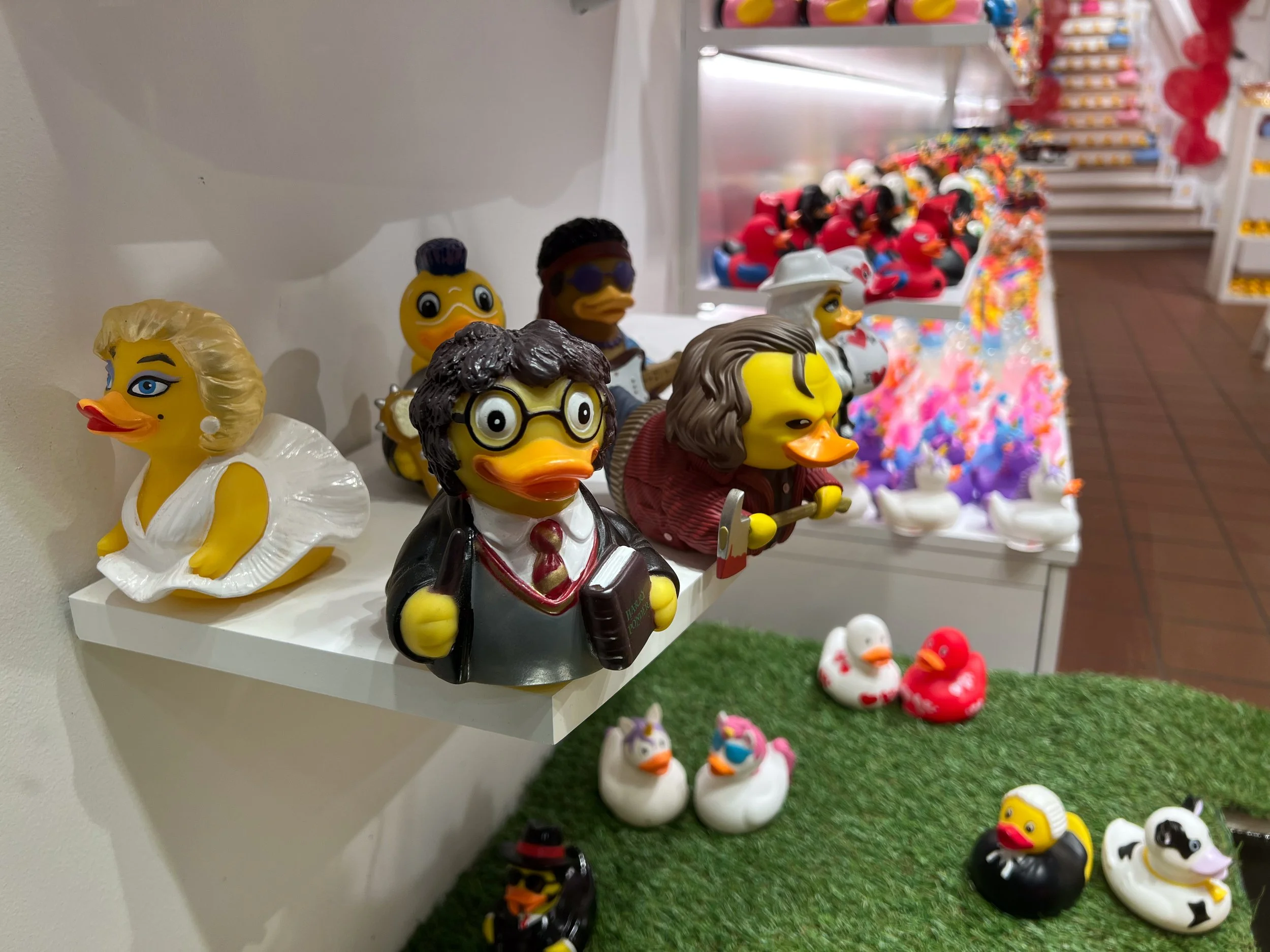
Heading back into the rain, I walked towards the Grand Place (more on that in the next section), and along the way I passed the Brussels Duck Store, which stopped me in my tracks and made me laugh. And who doesn’t need more laughter in their life?
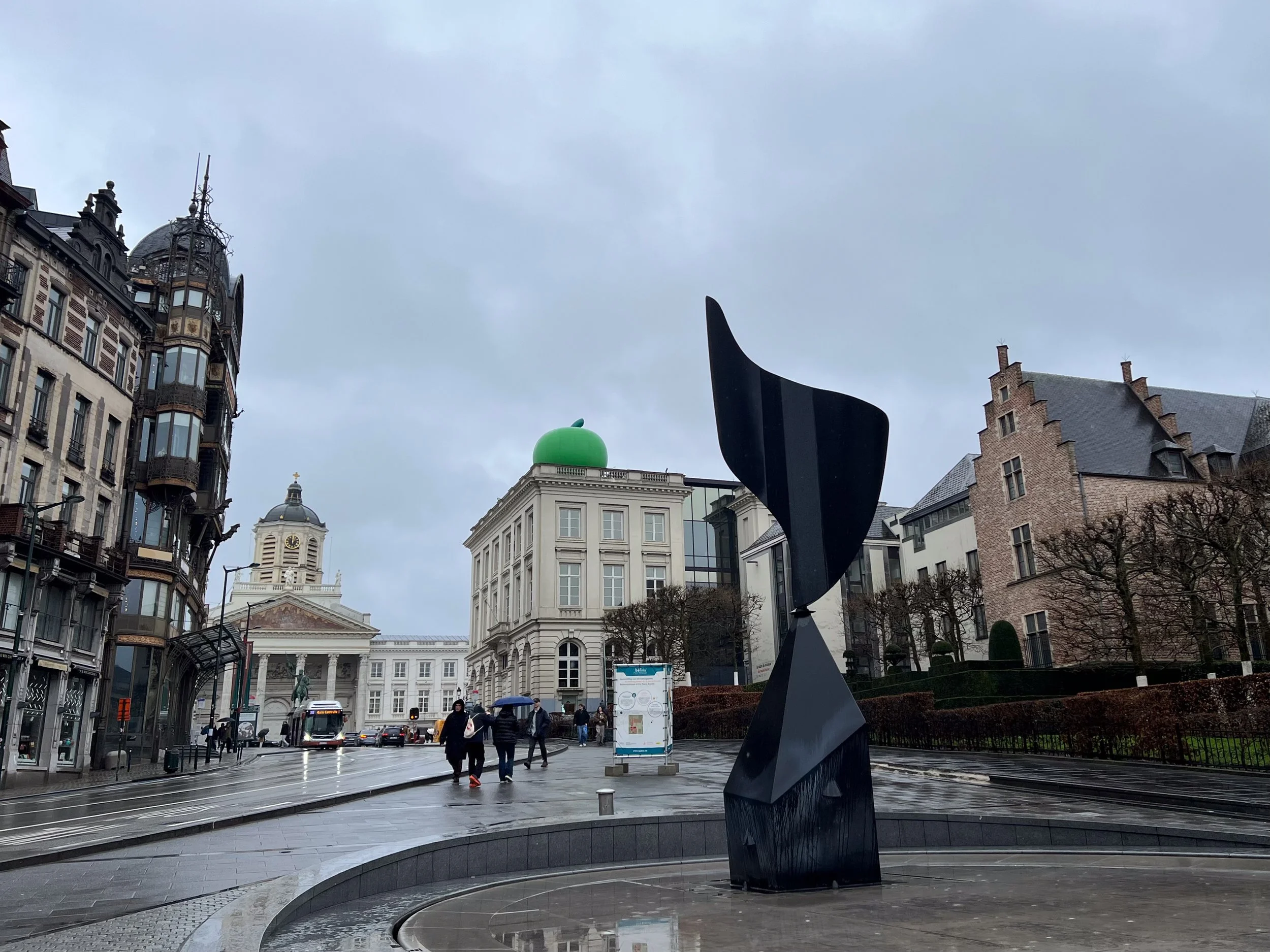
It was then time to get out of the rain for a while, so the Magritte Museum was my next destination. After climbing the Mont des Arts to get there, my destination was obvious: the building with the giant green apple on top!
But before reaching the Magritte Museum I passed a beautiful building which, according to the GPSmyCity guide, houses La Pharmacie Anglaise, a cocktail bar "where historic architecture meets a theatrical drinking experience." I missed out on the experience this time - guess I'll have to come back!
The Magritte Museum and the Museum of Old Masters are in the same location, and I foolishly bought a combined ticket—it was far too much to take in on the same visit! There’s more about my museum explorations here.
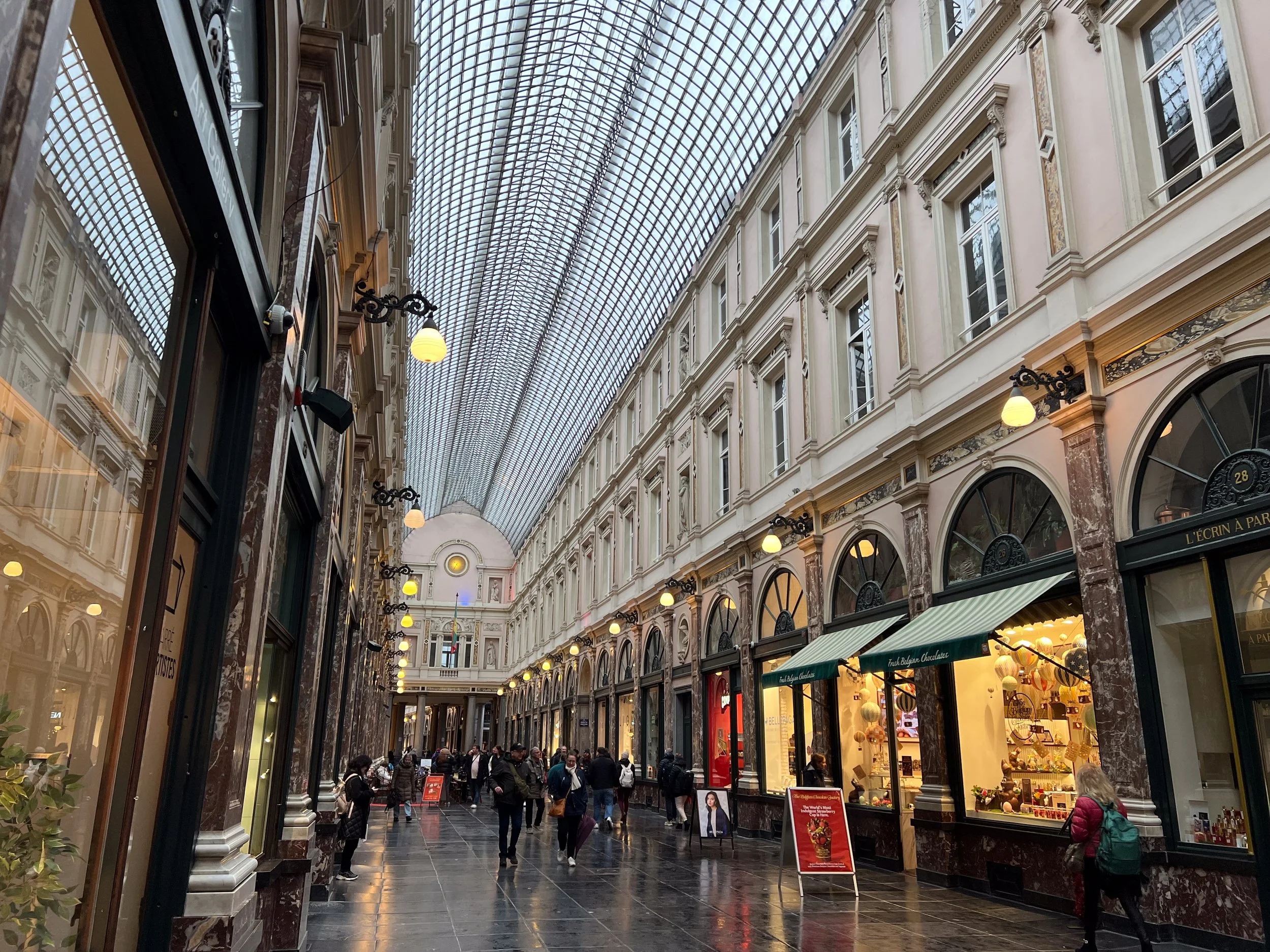
Galeries Royales Saint-Hubert, an elegant covered arcade of shops and restaurants.
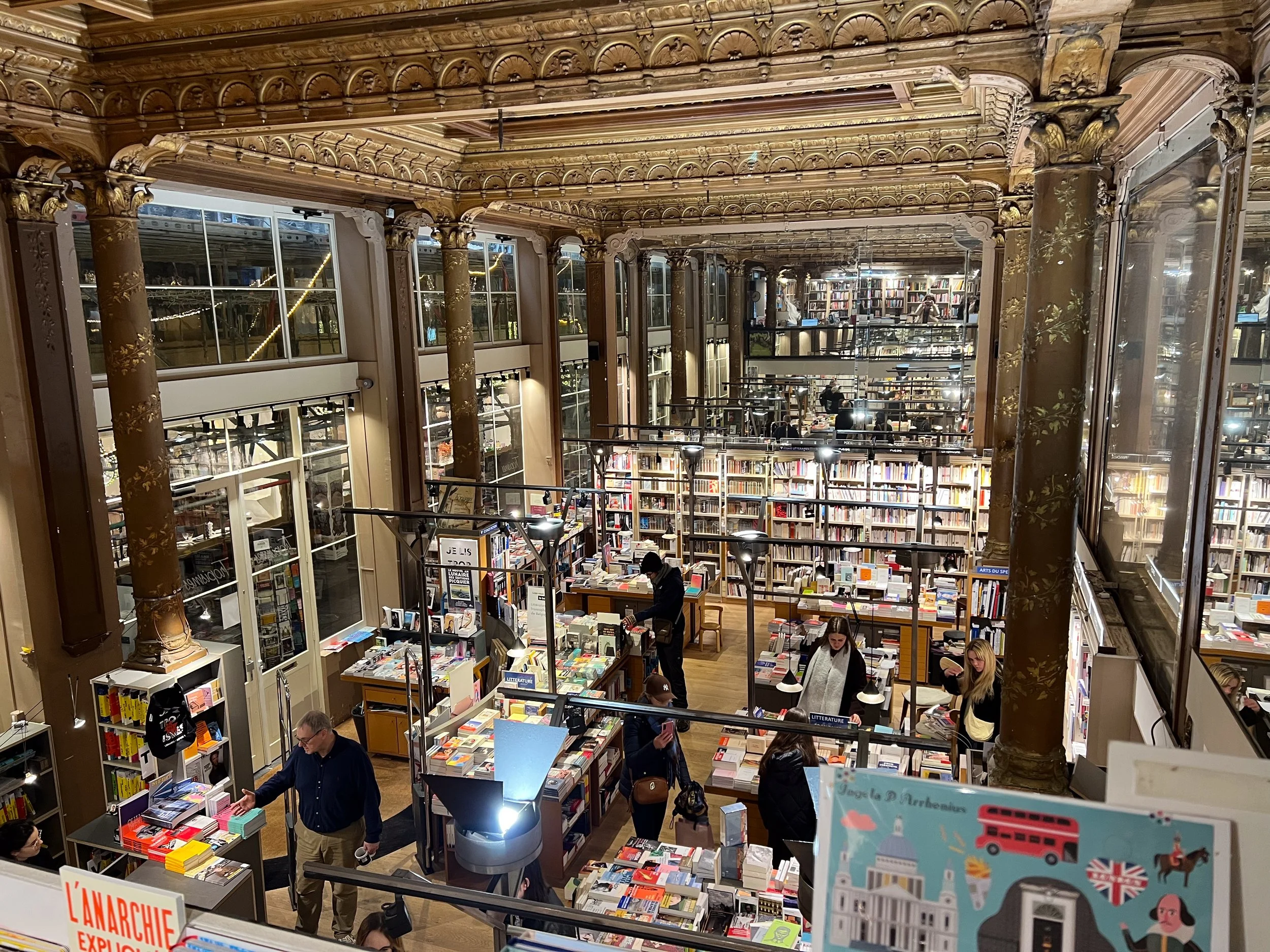
Les Tropismes Bookshop
Guess which building is the Magritte Museum?
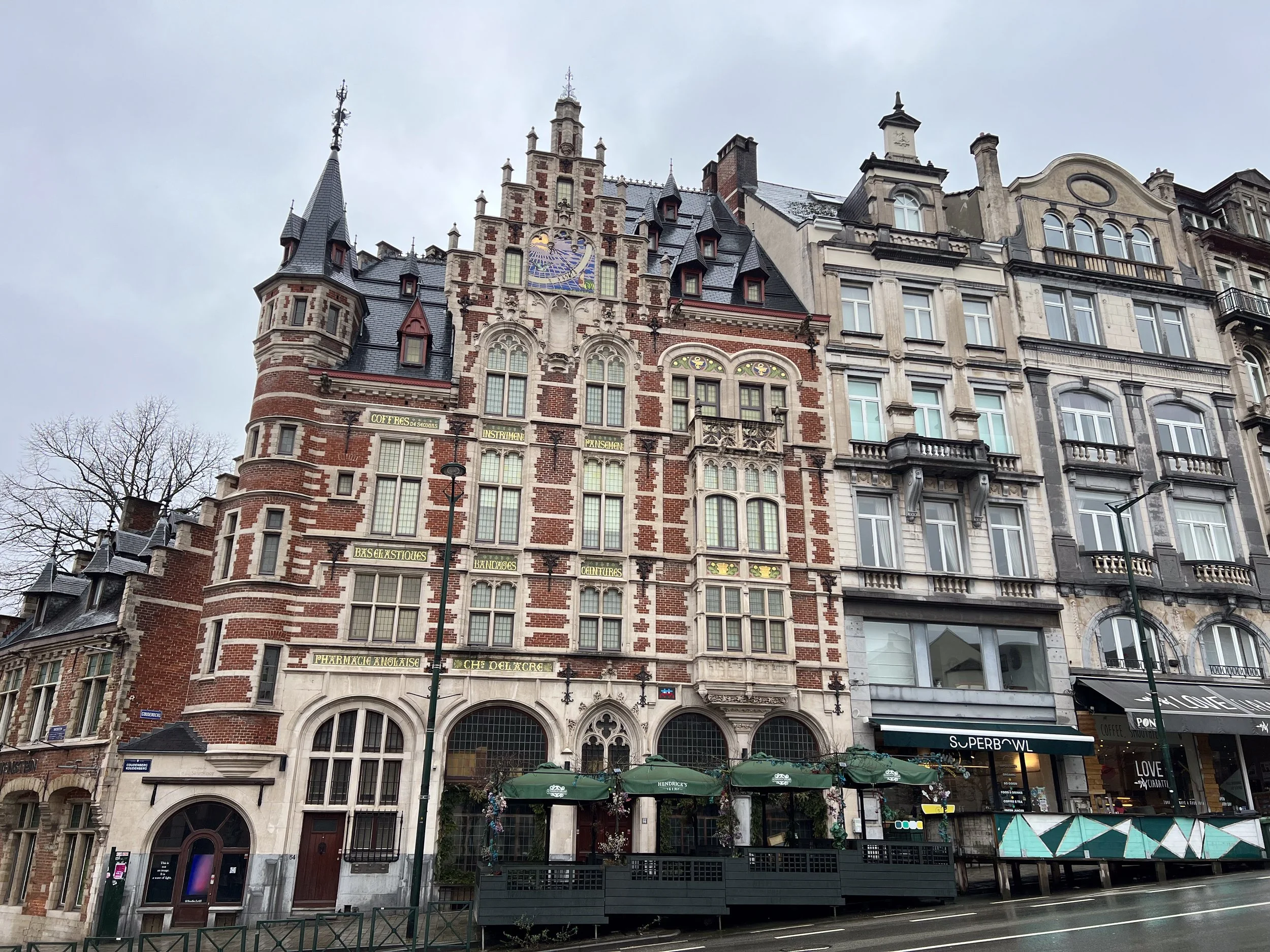
The beautiful building which is now home to La Pharmacie Anglaise, a cocktail bar.
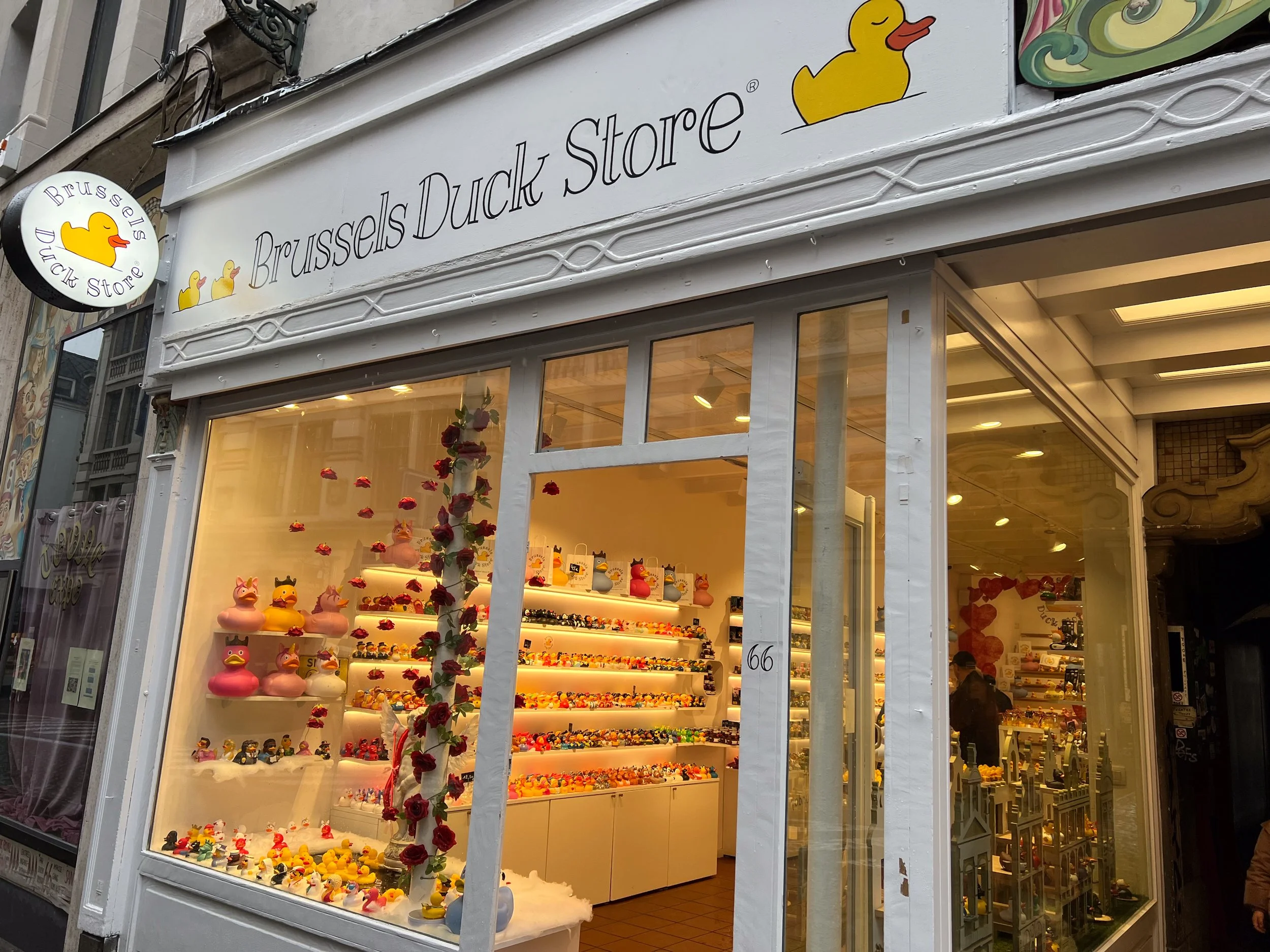
The Brussels Duck Store made me smile every time I walked past it.
And I walked past it a lot, because it was on one of the streets I frequently used to get from my apartment to other places I wanted to visit.
The Grand Place, The Bourse, and Beer
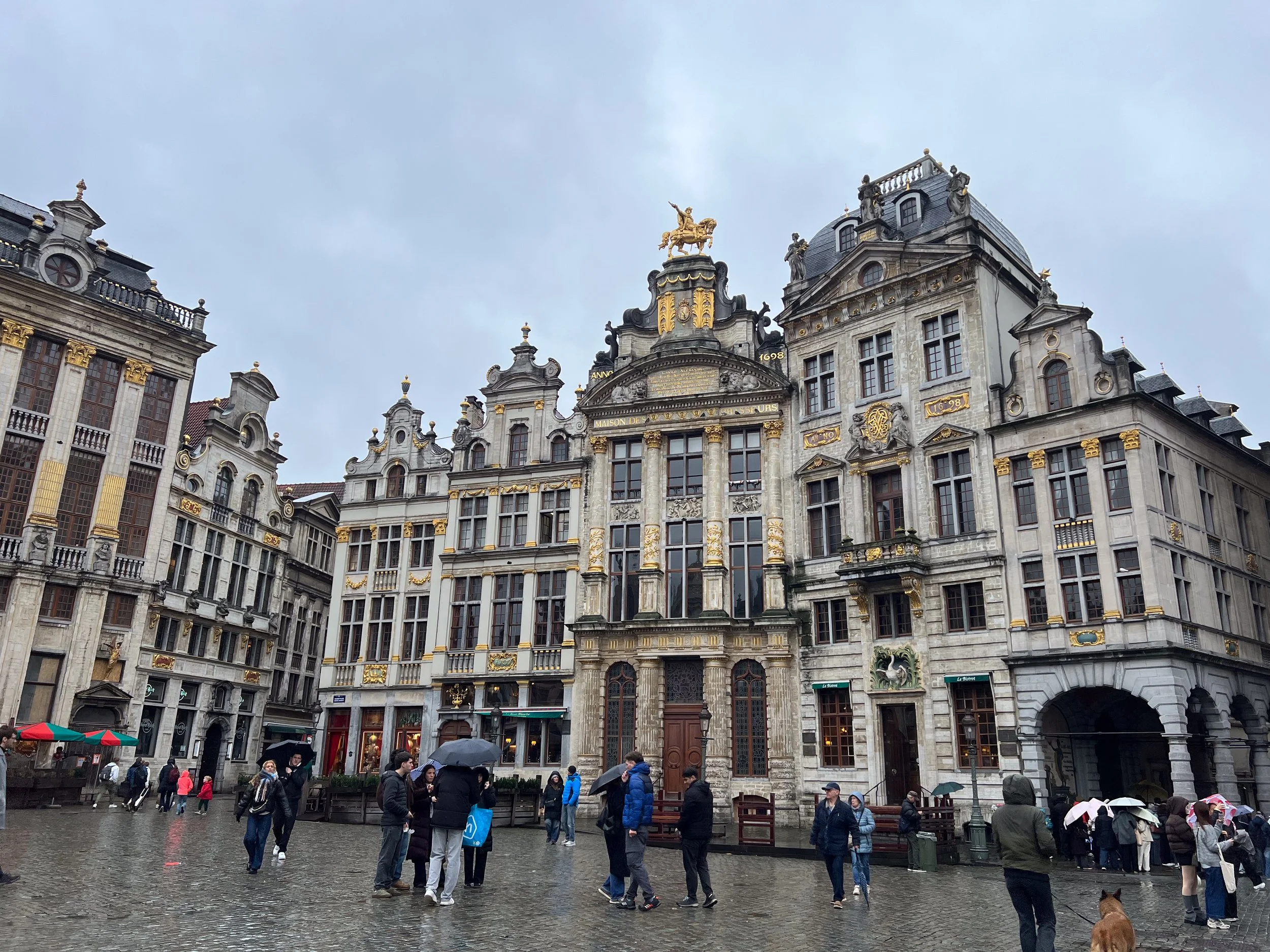
The ornate and gilded facades of the buildings in the Grand Place came about after the once-modest market square was rebuilt following a bombardment by the French in 1695 (during the Nine Years War). It became a UNESCO World Heritage site in 1998. The buildings include guildhalls, the Town Hall and the King’s Hall (which never housed a King, but is the only original medieval building on the square, dating back to the early 1400s).
Just a few of the symbolic golden adornments on the guildhalls are: a Golden Tree (brewers), a Swan (butchers), a Star (innkeepers), a Fox (haberdashers), and a Wheelbarrow (tallow merchants). My apartment was so close that most evenings I wandered over to Grand Place after dinner, and each time I did so there was something different happening.
The Bourse, once the Stock Exchange Building, is now home to the Belgian Beer World Experience and a rooftop bar. The Belgian Beer World Experience requires a ticket, which includes a beer of your choice at the rooftop bar. Or you can skip the museum part and go straight to the bar! I found the first part of the museum to be not very interesting, but it improved as I moved through. Here’s a fun tidbit from one of the exhibits:
For a long time, brewing beer was a kitchen job for women. The brewsters would stick a broom through the window to show that fresh beer was on sale. They kept cats to keep mice out of the grain, wore hats to be recognised and had a large cauldron in which they mixed herbs. During the witch hunts a few centuries later, witches were often depicted with those recognisable marks of brewsters. It was the monasteries that made brewing a “male” profession in the Middle Ages.
I’m not much of a beer drinker, generally preferring wine, but I did love the Belgian ales I tried. A fun gimmick at the end of the Belgian Beer World Experience was an interactive tool that asked you a few questions, then produced a list of beers that might suit your taste, which you could then have printed on a beer coaster. The first on one my personalized coaster was Chimay Bleue, and I did indeed enjoy it!
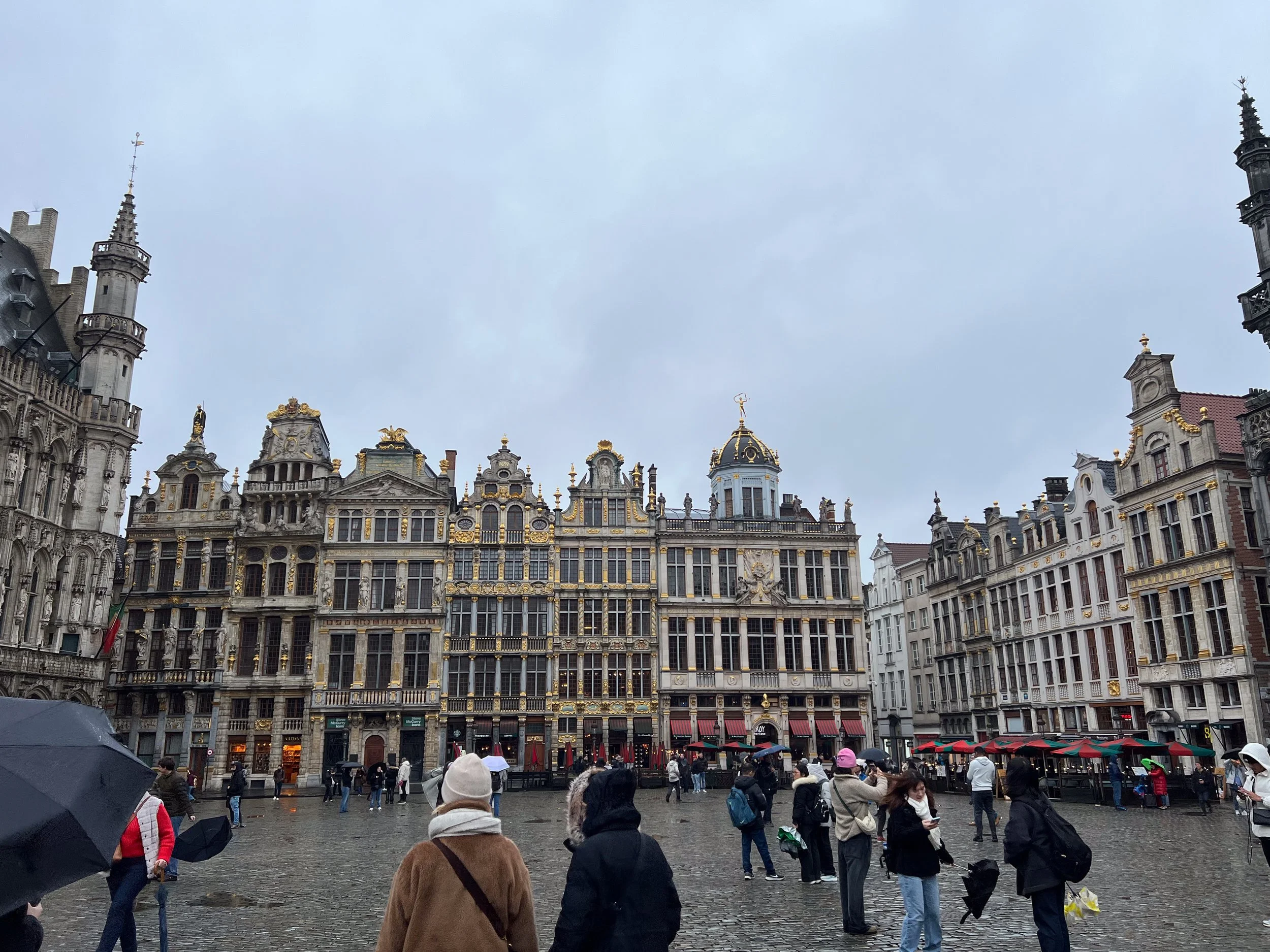
My first visit to the Grand Place was in the rain.
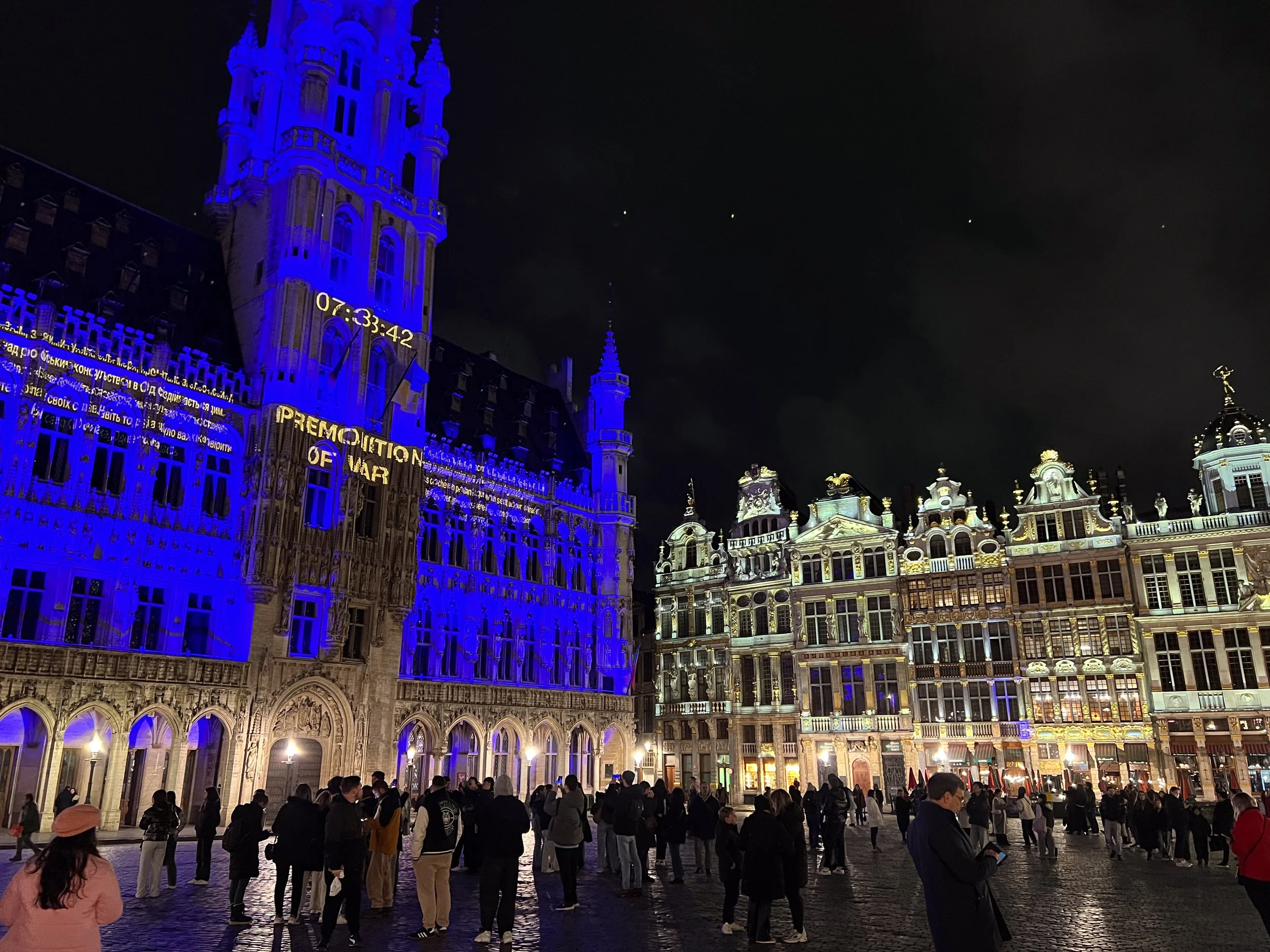
"Premonition of War." This was the night before the 4th anniversary of Russia invading Ukraine: a clock projected onto the Town Hall counted down until the moment it happened.
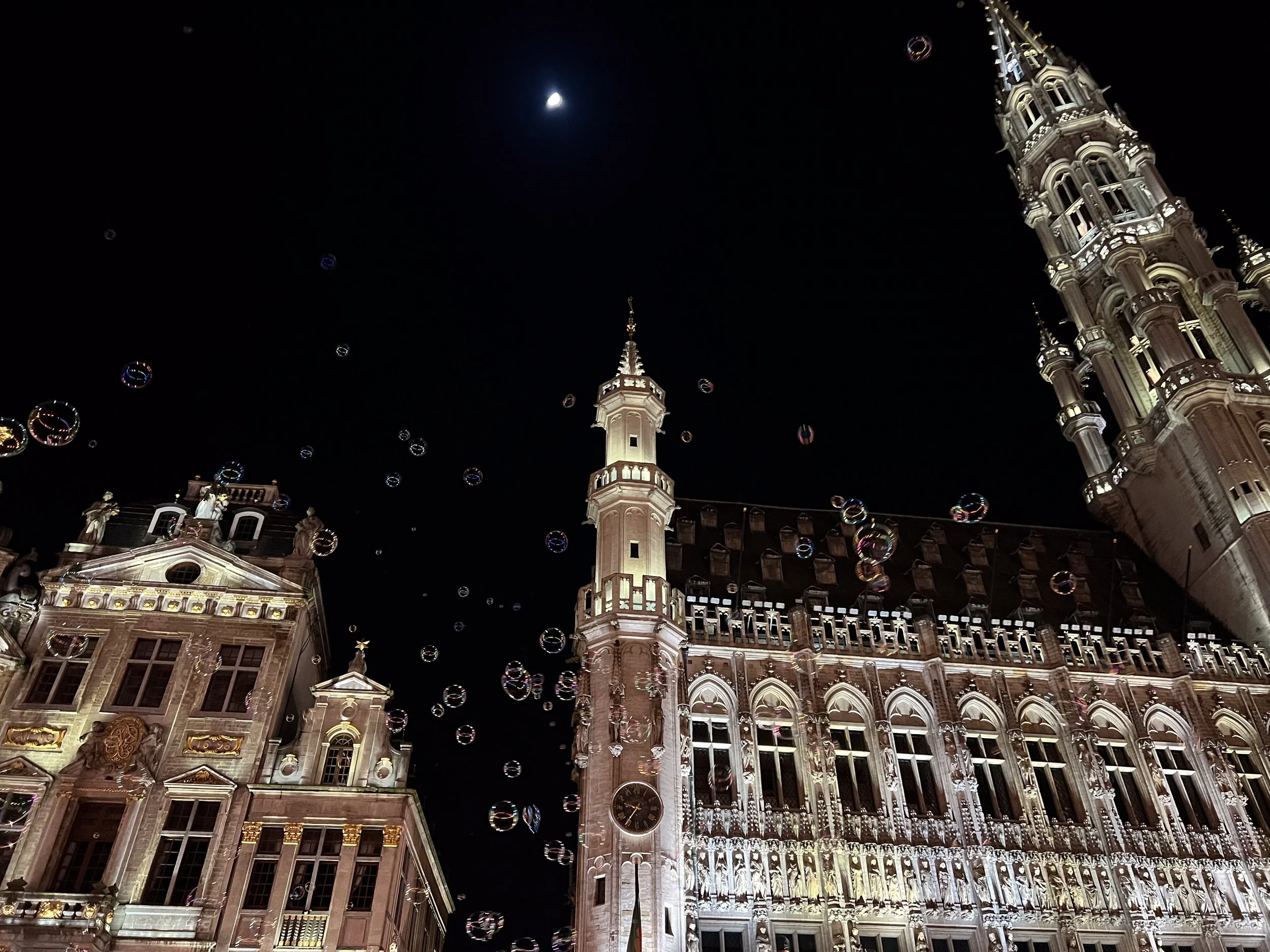
On another of my after dinner wanders through Grand Place, someone was making giant soap bubbles, which looked like they were floating to the moon.
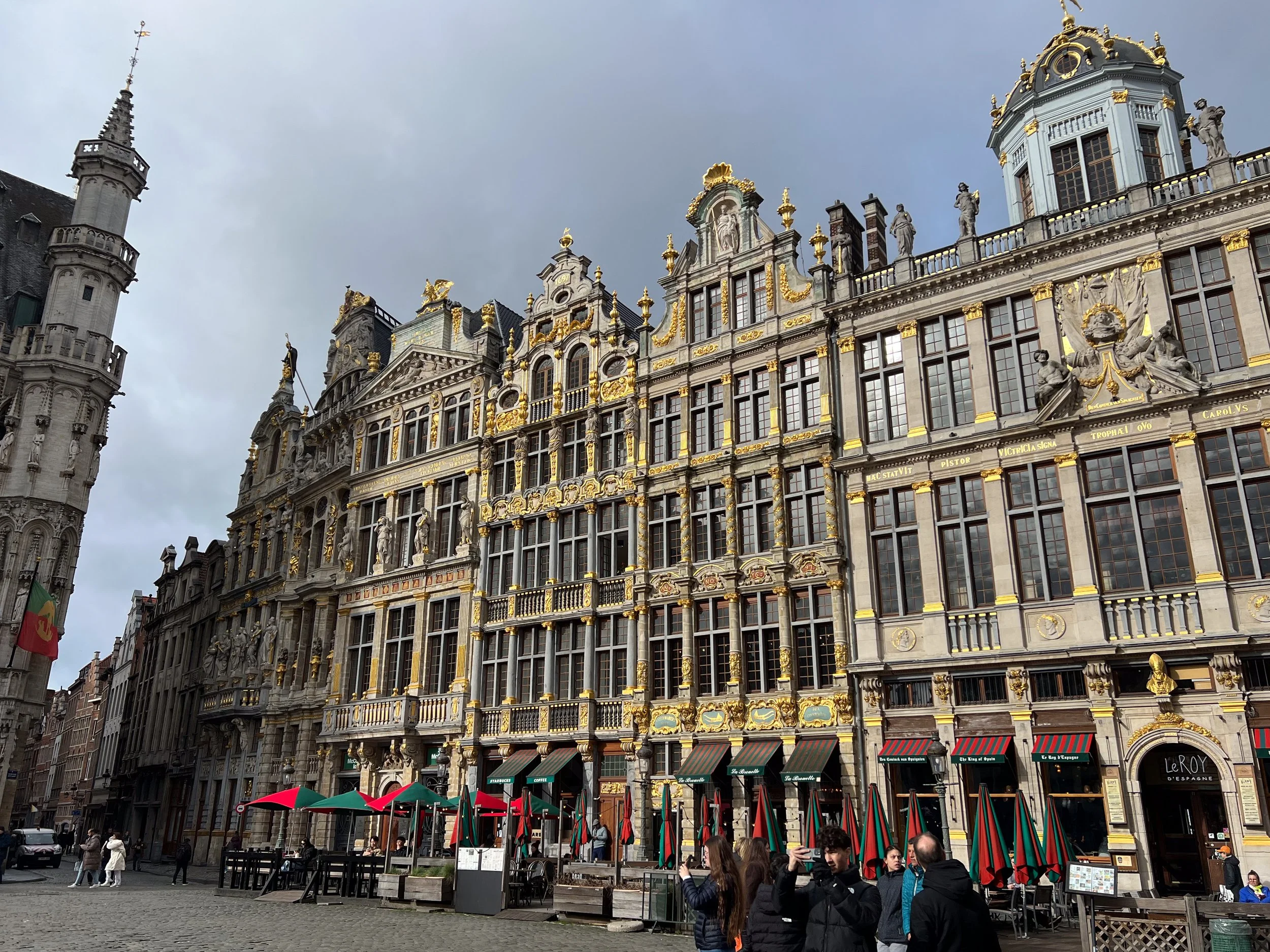
Grand Place on a slighty sunnier day. Well, at least a not actually raining day.
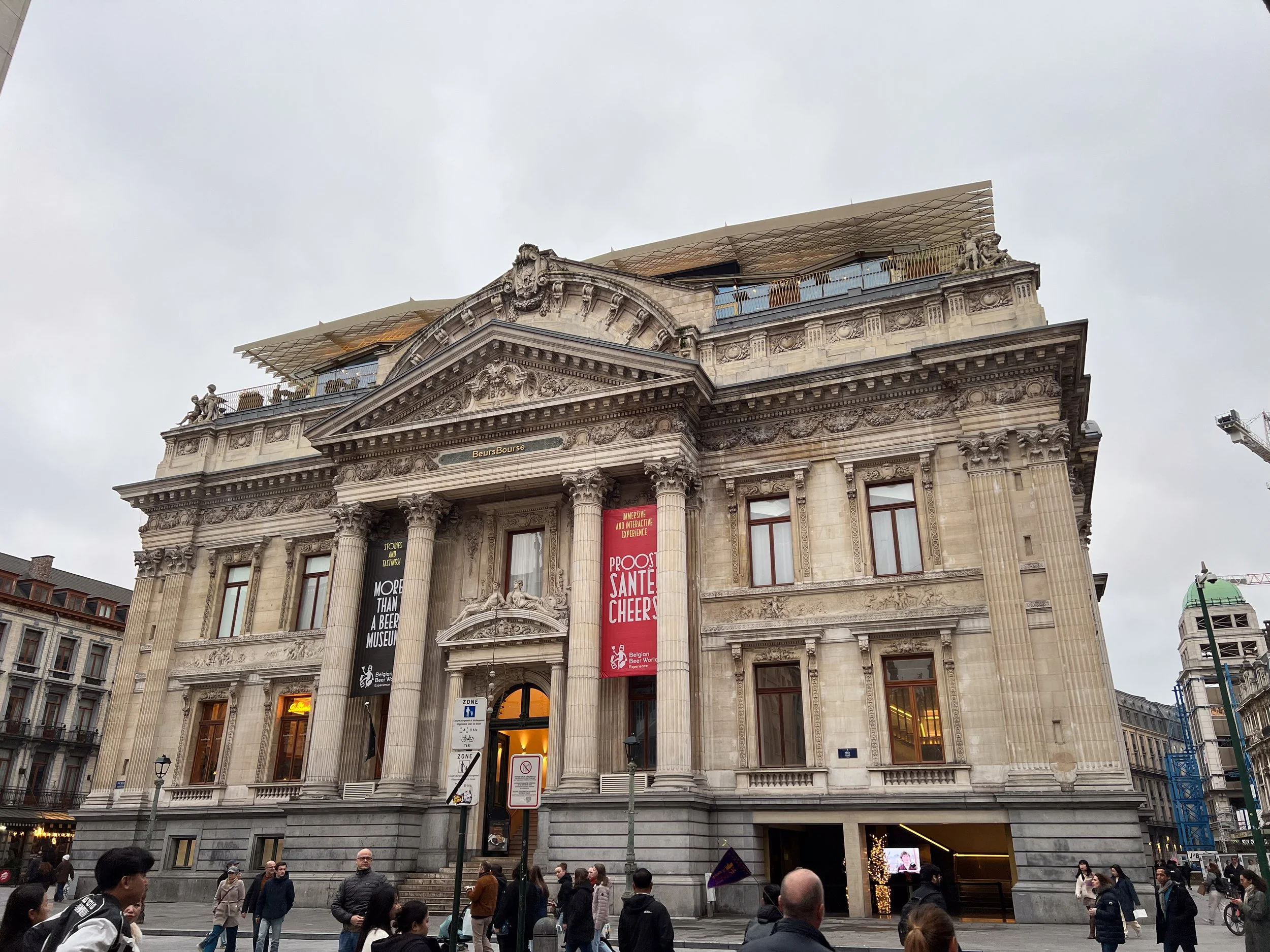
The Bourse - you can see the balcony of the rooftop bar.
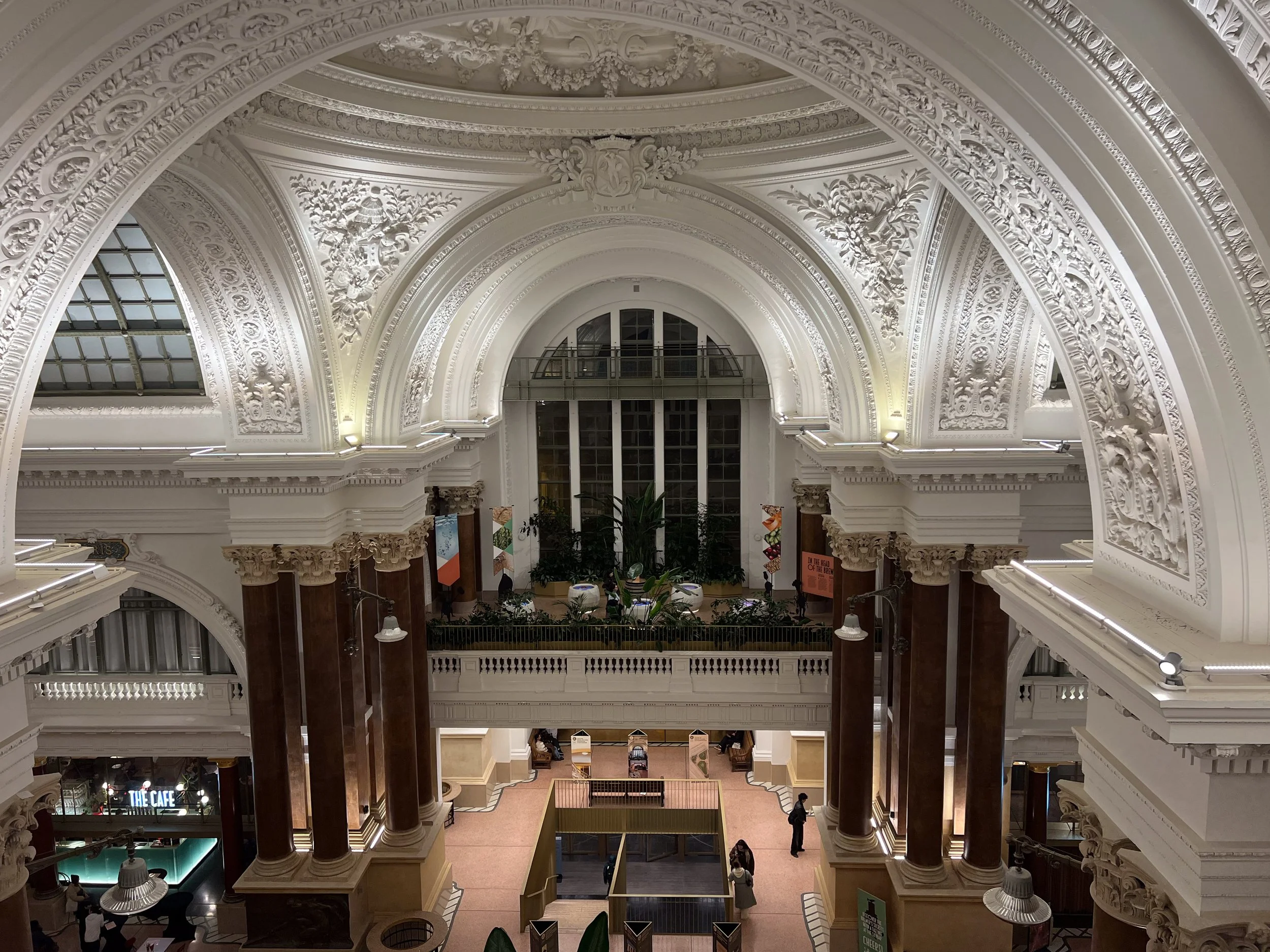
The Belgian Beer World Experience museum gets you access to the upper levels, with lovely views of the interior of the Bourse.
Museums
There are a wealth of museums in Brussels, and these are the ones I visited. Some were planned destinations, such as the Magritte Museum, and some were impulsive visits (such as the BELVue museum, which I ducked into because I was tired of walking in the rain).
Magritte Museum and Museum of Old Masters
As I mentioned earlier on this page, I made the mistake of buying a combined ticket to visit both museums (which are in the same building) on the same day. While I feel that both are worth a visit, it was a mistake to see them at the same time. It was simply too much to take in on one visit.
City Museum
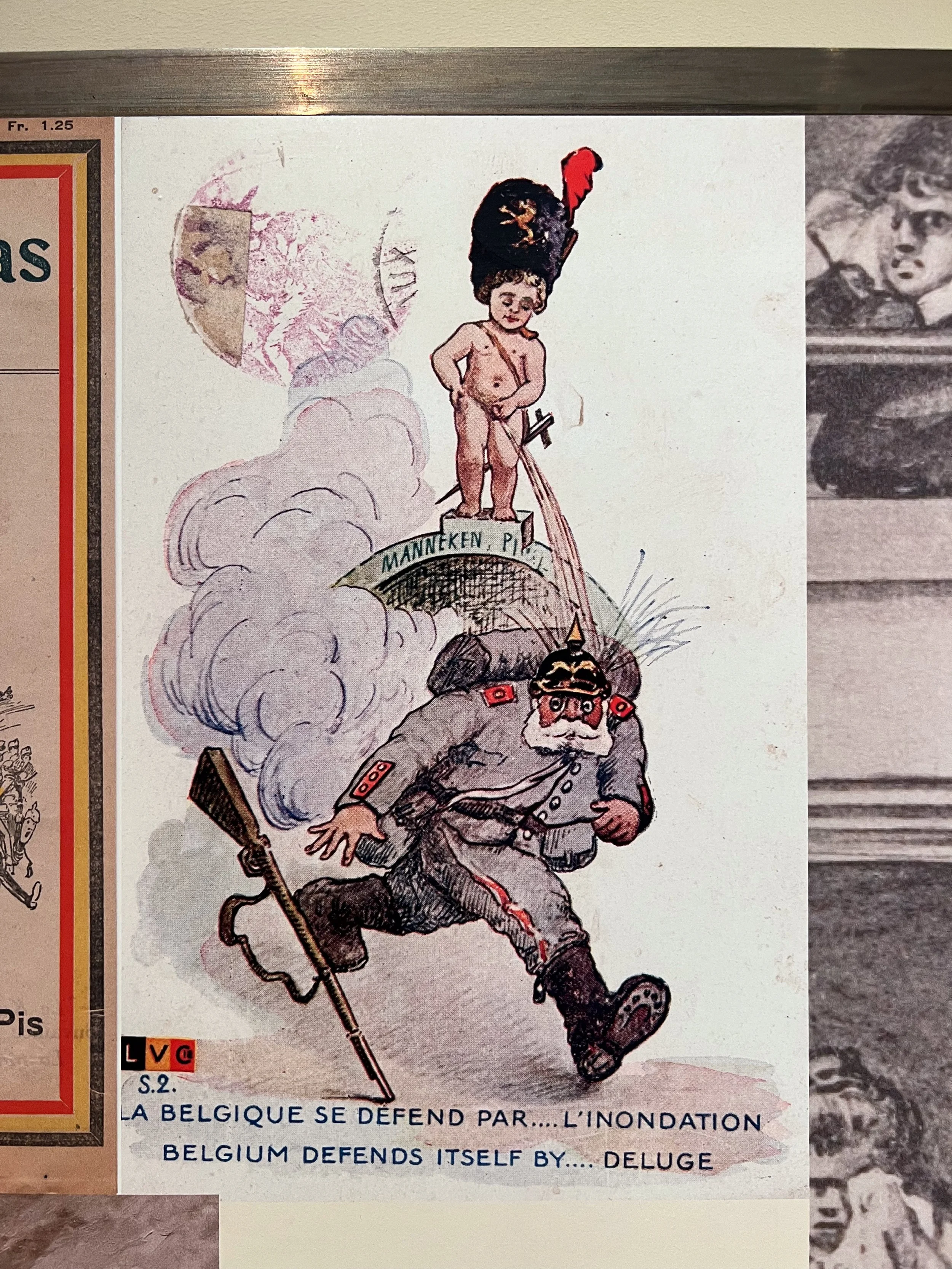
This is in the Kings Hall in Grand Place, and it was partly a “get out of the rain” activity. As the name implies, it focuses on art and artifacts related to the city of Brussels. I was quite interested in the large scale model of how Brussels looked in the 13th century, and perhaps my favorite part was the corridor leading to the room where the original (ish) Manneken Pis statue resides. The corridor is lined with posters proudly featuring the little boy peeing in various propaganda campaigns.
BELvue Museum
This museum, located next to the Royal Palace, is about Belgium’s history. I enjoyed it partly because I knew very little about the country before visiting, and partly because of the way it is curated. It is organized in two interwoven strands: one is by theme, one is by timeline. The rooms explore seven key themes in Belgium’s history: Democracy, Prosperity, Solidarity, Pluralism, Migration, Language, and Europe, while the corridors are lined with objects organized chronologically (and the more contemporary exhibits showcase some wonderful Belgian designs).
Horta Museum
This is the home and studio of Victor Horta, an architect famous for Art Nouveau design. Unfortunately, on my visit in February 2026, it was undergoing a major renovation—a fact not mentioned on the website. And since the website emphasizes that timed entry tickets must be purchased in advance, the unsuspecting tourist has no idea how diminished the experience will be until after they have purchased a ticket and trekked over there.
Museum of Musical Instruments
I loved this museum! It is in a beautiful building in the Mont des Arts area, and has a collection of approximately 8,000 instruments. For most of the instruments, the audio guide includes a sampling of the instrument being played, which added a lot to the experience for me.
Did you know that the saxophone was invented by a Belgian, Adolphe Sax? I didn’t. Or that there is such a thing as a pyramid piano? Or that the oldest musical instruments in the world are whistles and flutes made by boring holes into bones?
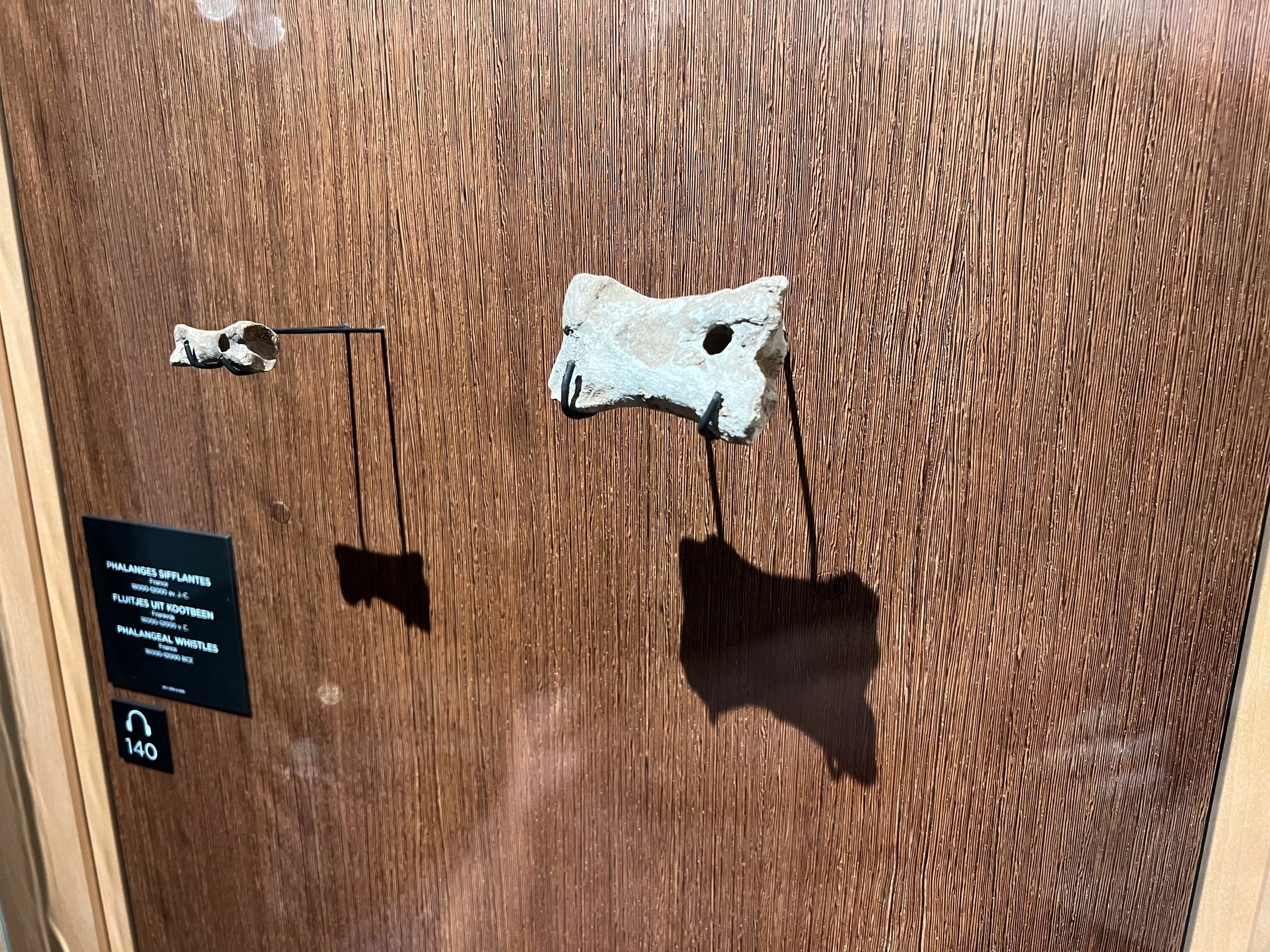
Phalangeal Whistle, from prehistoric times.
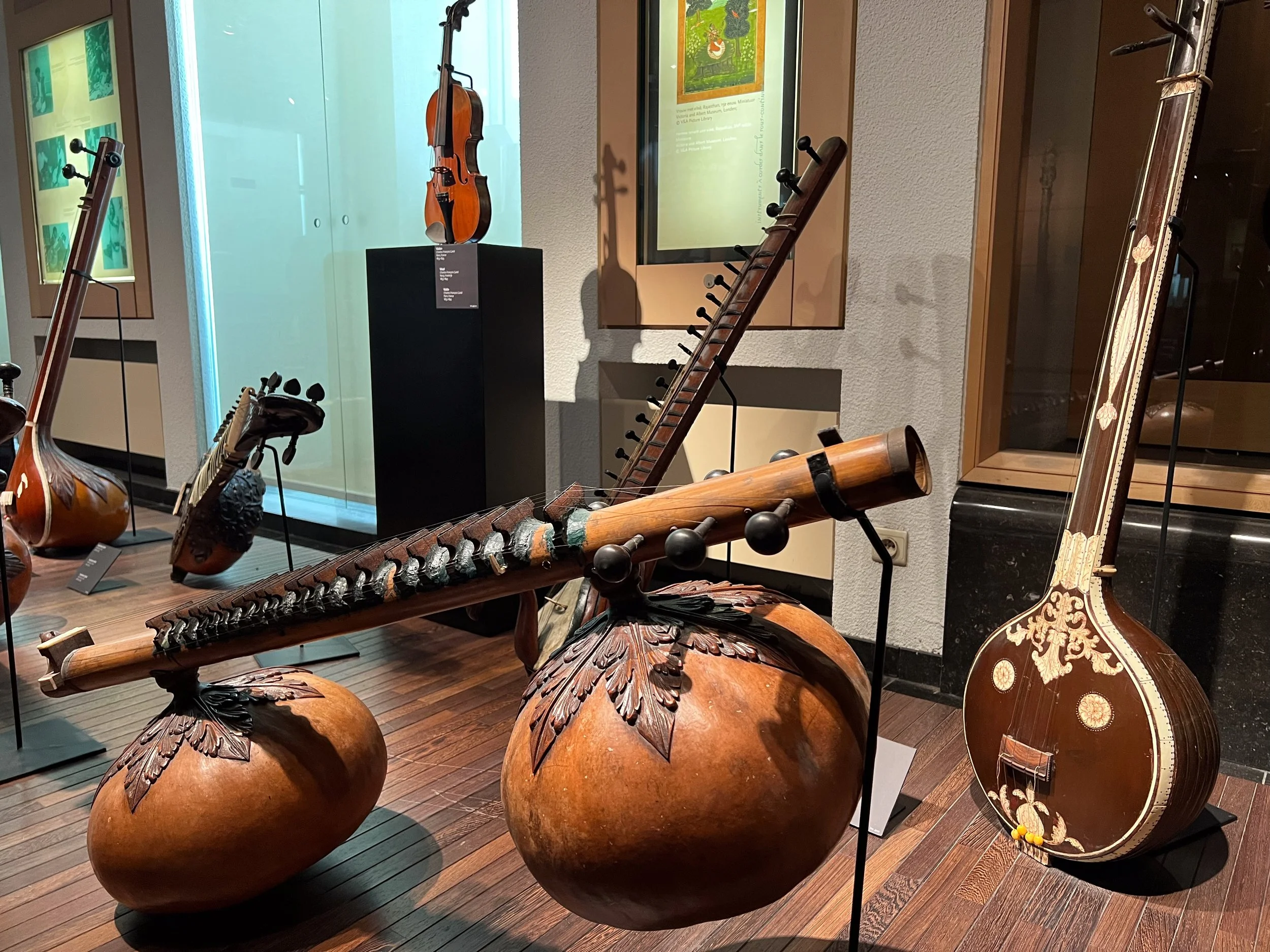
In the foreground is a type of Indian zither, a rudra veena.
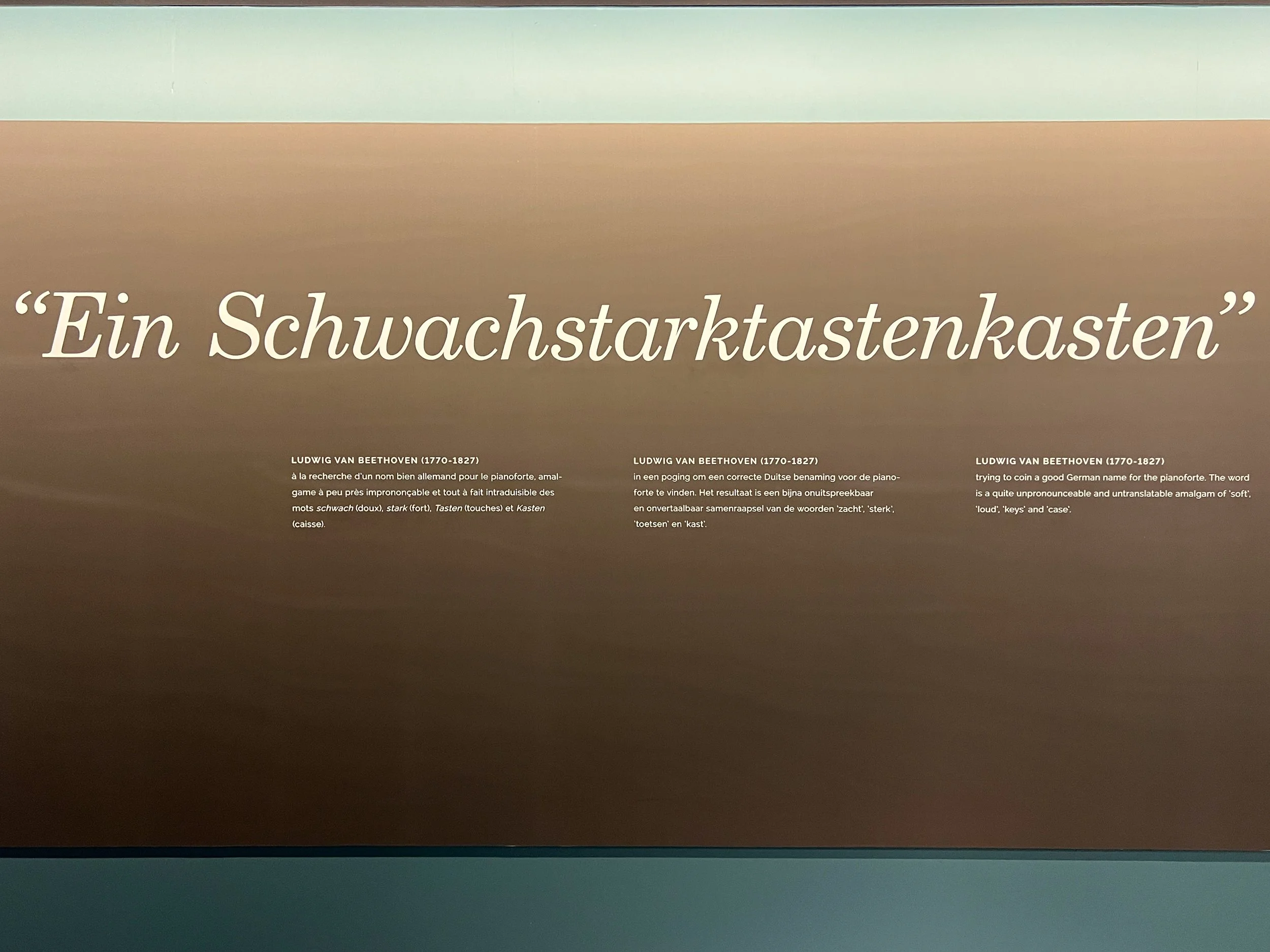
This unpronounceable word was Beethoven's attempt to coin a good German name for the pianoforte. Apparently the word is a combination of "soft," "loud," "key," and "case."
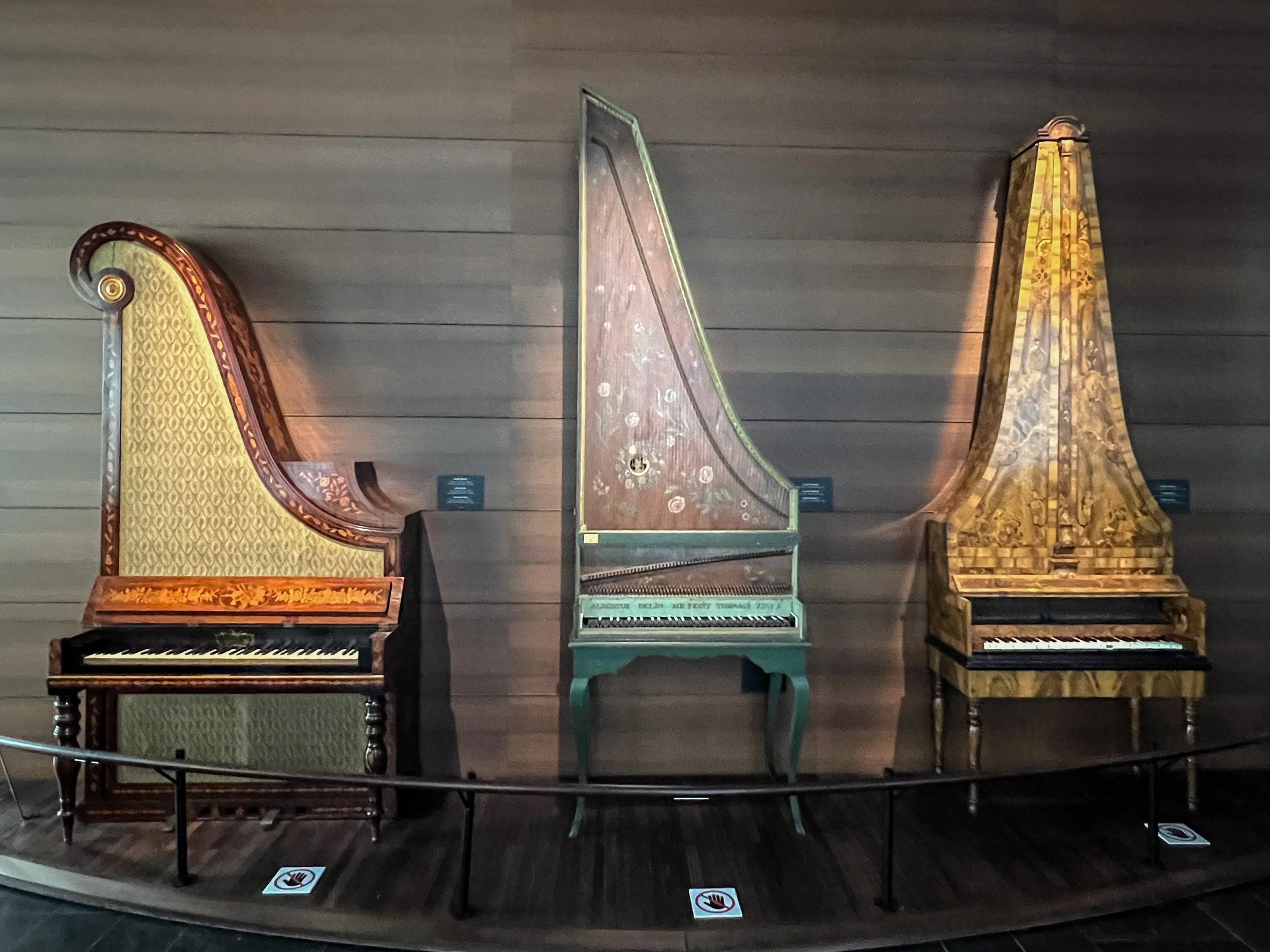
Who knew there was such a thing as a Pyramid Piano? Not me.
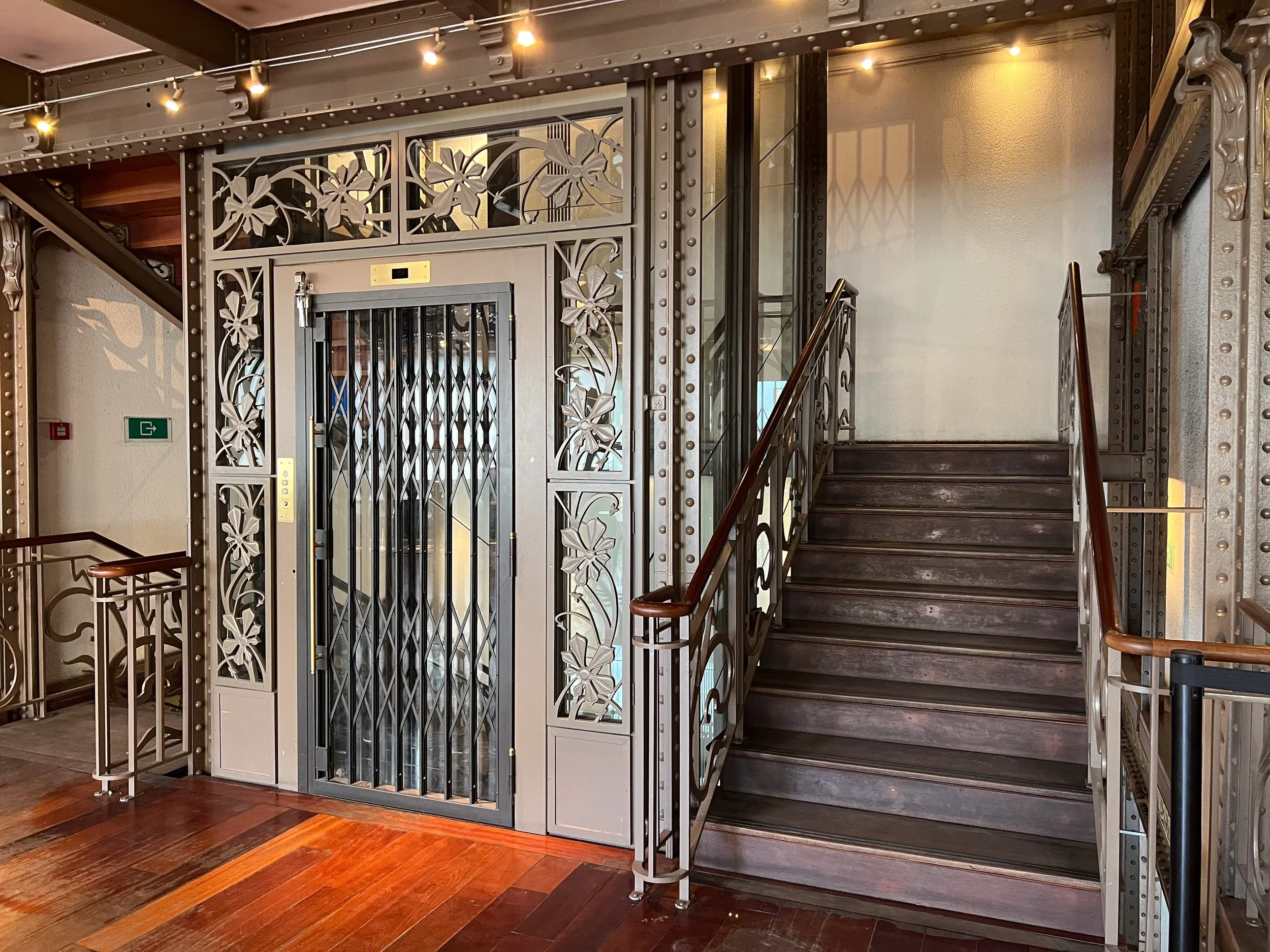
Beautiful Art Noveau details inside the musuem.
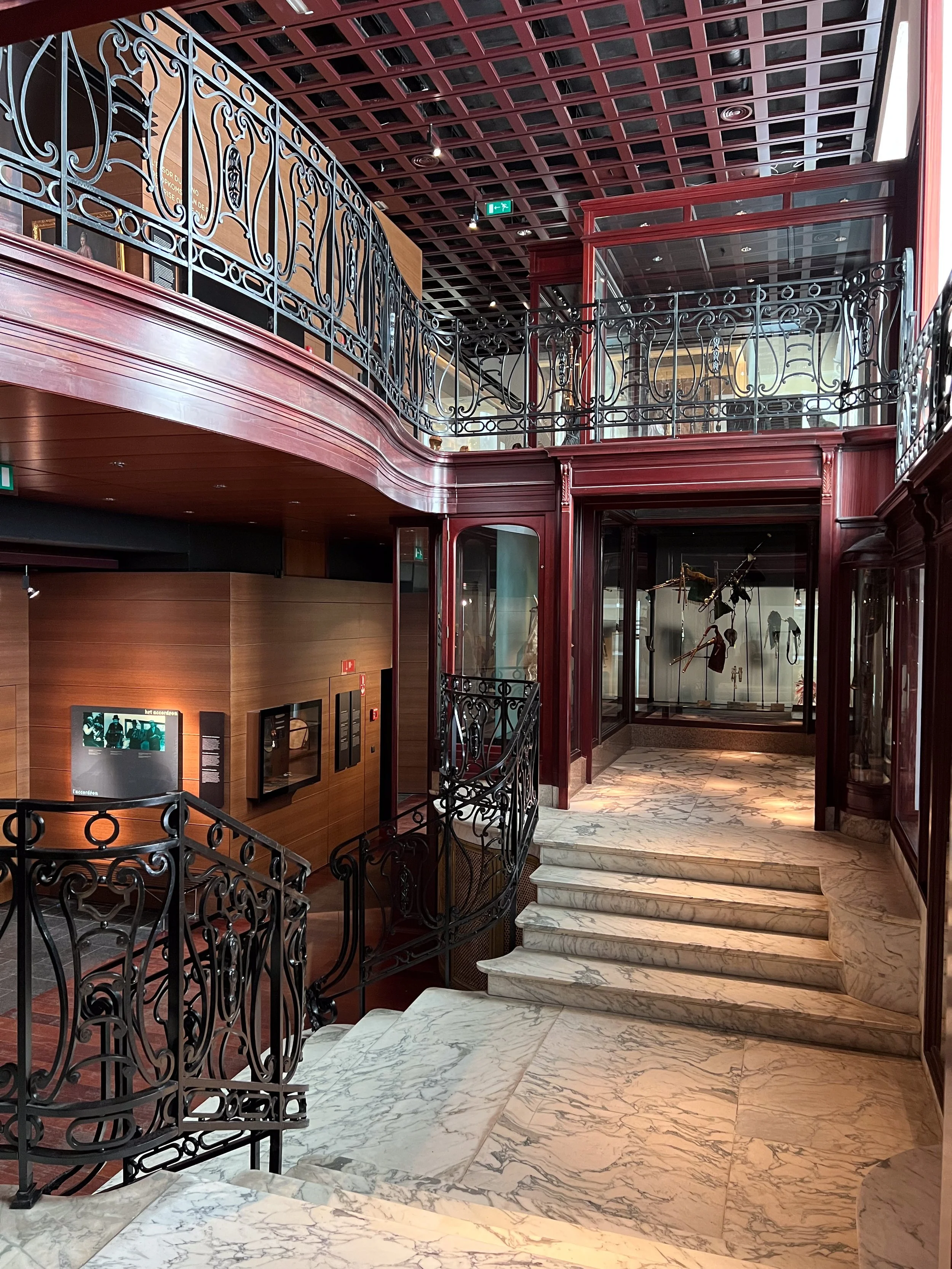
More Art Noveau design.
European Union
website: https://european-union.europa.eu/index_en
One of the primary locations for the European Parliament, known as the Hemicycle, is in Brussels. I wanted to learn more about the European Union, so I signed up for a guided tour of it. Where I learned that trying to understand the roles of the European Union vs European Parliament vs European Commission is rather confusing! So here’s a graphic I took from the European Parliament website to help show how they are connected:
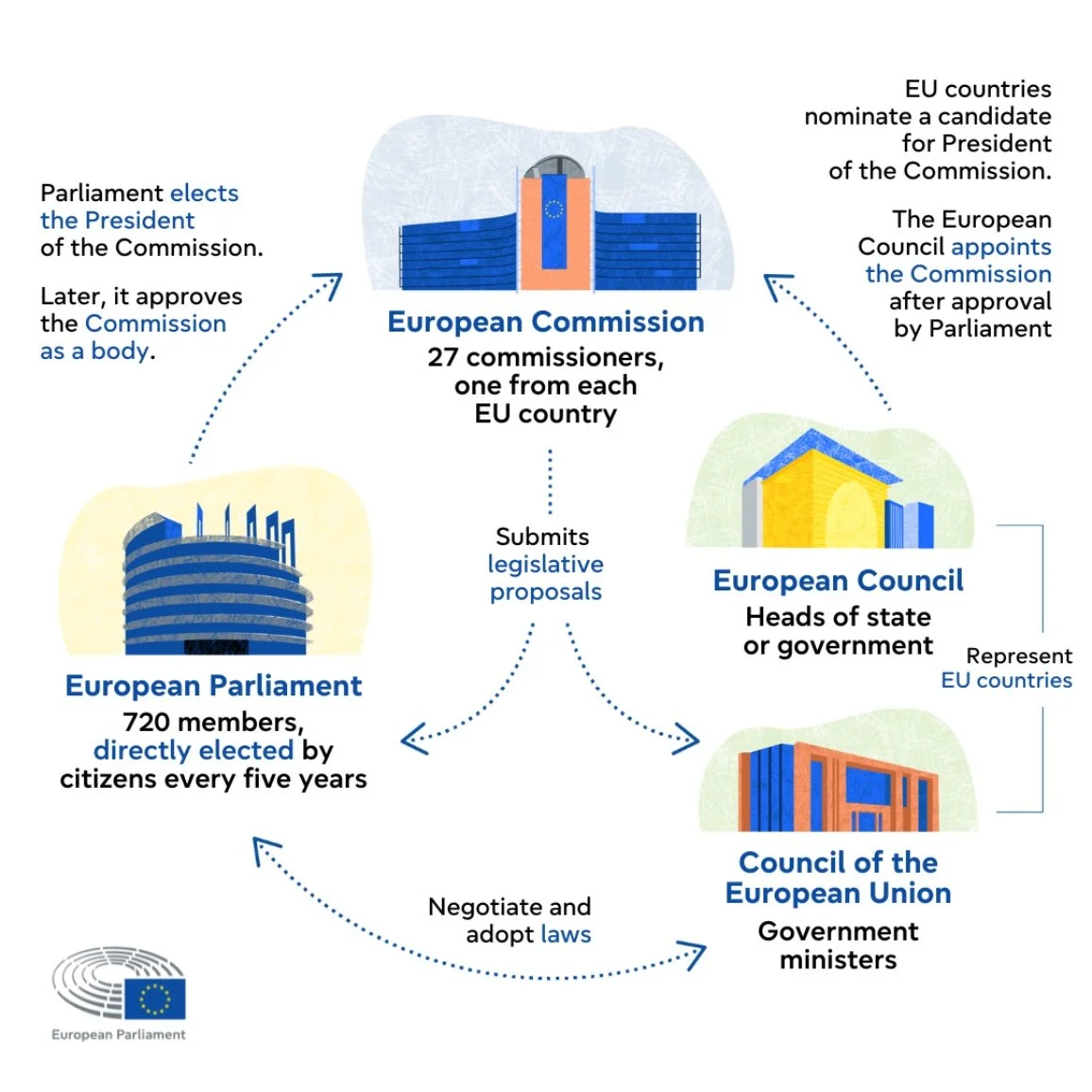
The EU was established after WWII to foster economic prosperity and to promote peace. There are currently 27 countries in the EU, using the euro as a shared currency and allowing free movement of goods, services, and people between the member states.
The Treaty on the European Union states that any European country may apply for membership if it respects the democratic values of the EU and is committed to promoting them.
The first step is for the country to meet the key criteria for accession. These were mainly defined at the European Council in Copenhagen in 1993 and are hence referred to as 'Copenhagen criteria'. Countries wishing to join need to have:
stable institutions guaranteeing democracy, the rule of law, human rights and respect for and protection of minorities;
a functioning market economy and the capacity to cope with competition and market forces in the EU;
the ability to take on and implement effectively the obligations of membership, including adherence to the aims of political, economic and monetary union.
Once the negotiations are complete, the Commission gives its opinion on whether the candidate is ready to become a Member State. If the Commission recommends that the candidate is ready, an accession treaty is prepared. This document details the terms and conditions of the country's EU membership.
The accession treaty must then be approved by the European Commission, the European Council and the European Parliament before being signed and ratified by all EU Member States and the candidate country.
The candidate country officially joins the EU on the date outlined in its accession treaty.
European Commission (Executive Branch of the EU)
website: https://commission.europa.eu/index_en
The European Commission initiates new laws, which are then voted on by the European Parliament (the legislative branch). It is comprised of 27 members—one representative per country in the EU—who are appointed by the European Parliament. The EC is also responsible for the budget and for enforcement of laws which are passed by the Parliament.
The European Parliament (Legislative Branch of the EU)
website: https://www.europarl.europa.eu/portal/en
The European Parliament votes on whether or not to adopt laws drafted by the European Commission. There are three primary locations for the European Parliament. The main seat is in Strasbourg, but many debates and Parliamentary Committee activity occurs in the Brussels Hemicycle and the General Secretariat is located in Luxembourg.
Members of the European Parliament (MEPs) are directly elected by citizens of the EU. As of June 2024, there were 720 MEPs. The number of MEPs representing each EU country is based on the principle of degressive proportionality, which means that larger countries have more seats, but smaller countries have more representation per capita. The minimum number of MEPs from any country is six (Luxembourg, for example) and the maximum number is 96 (Germany, for example).
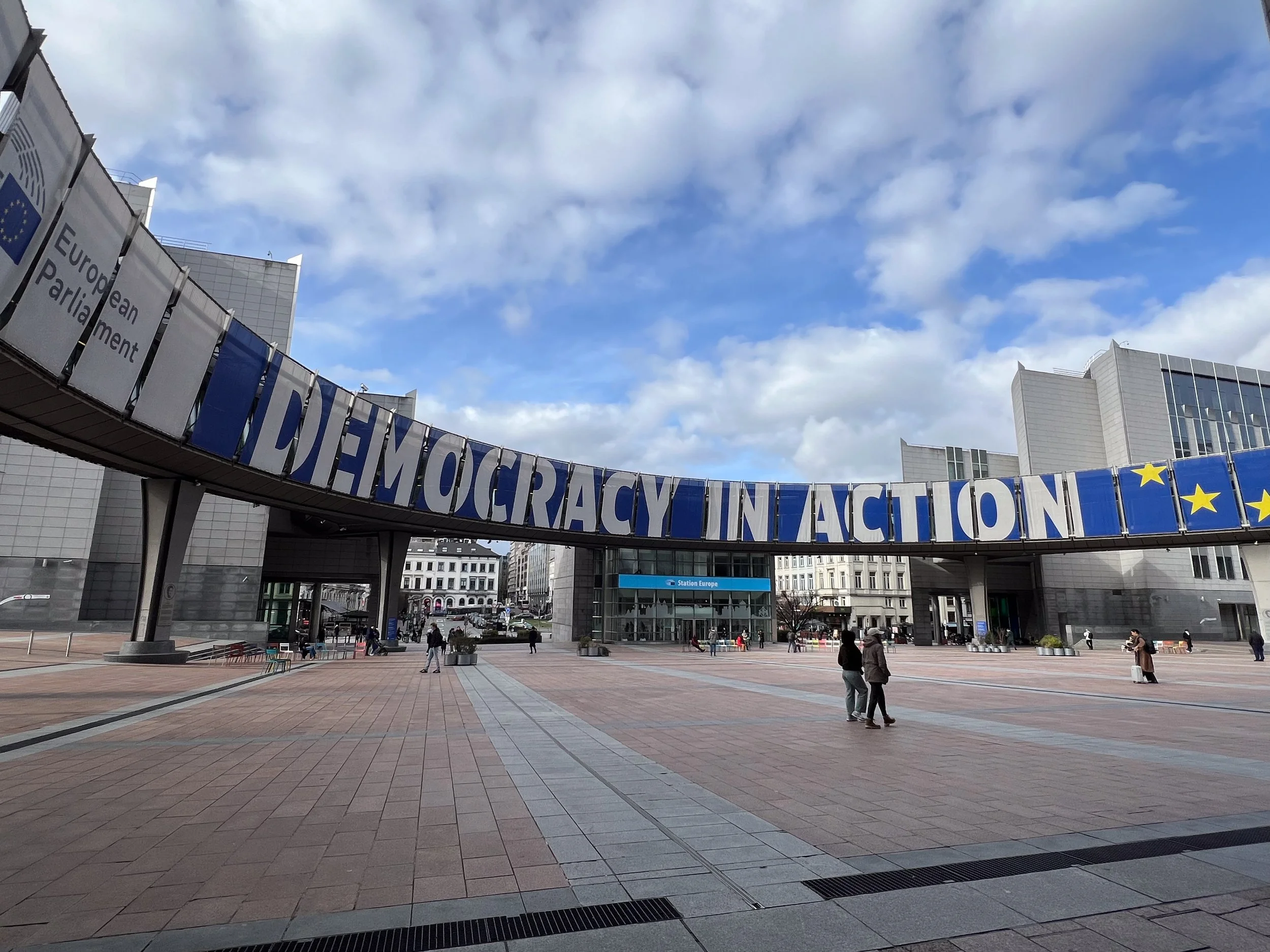
The European Parliament in Brussels
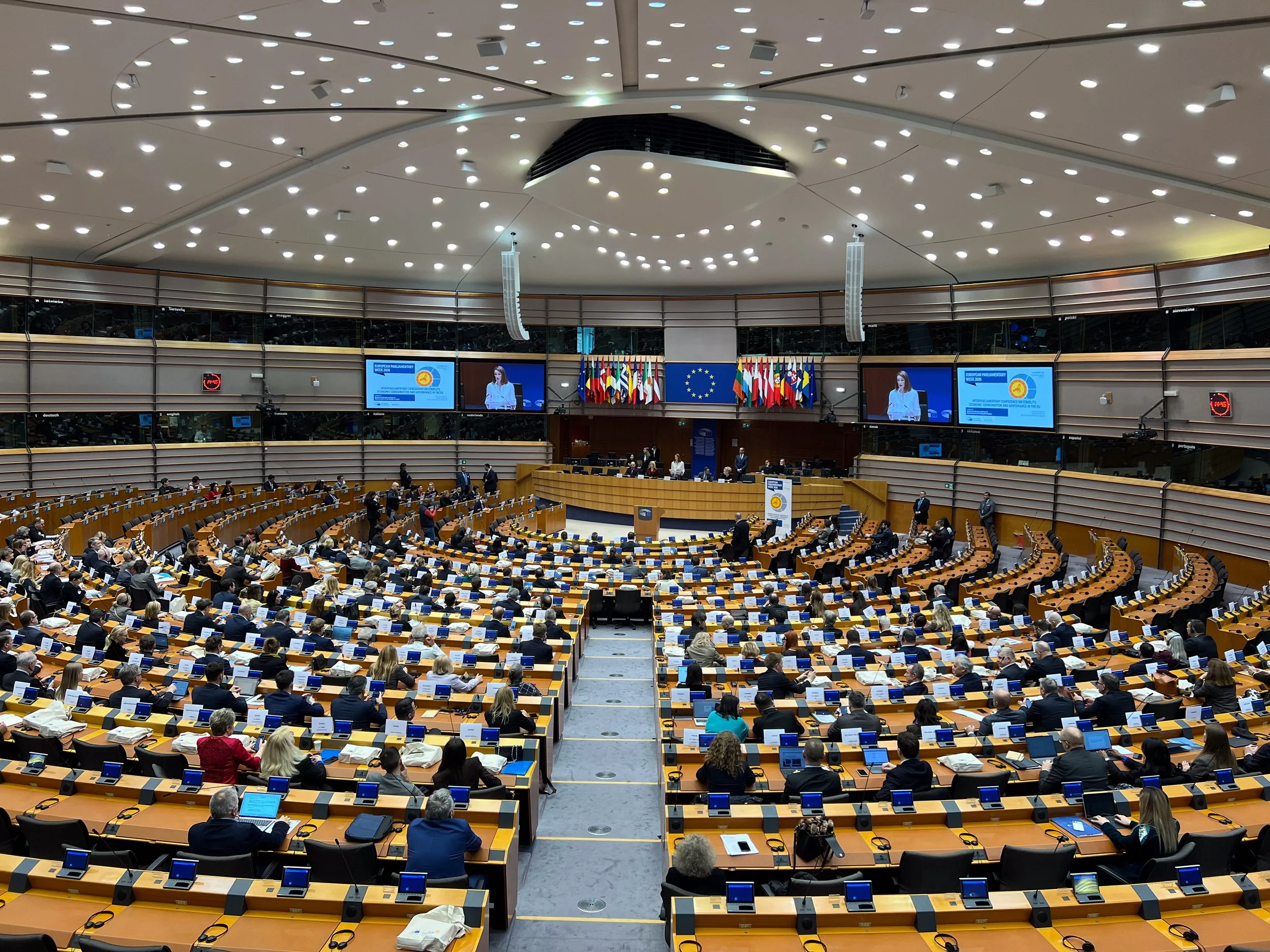
Inside the Hemicycle. We were lucky enough to arrive just as Roberta Metsola, the current President of the European Parliament, was speaking. She spoke in English, but the next speaker addressed the audience in Greek, which gave us the opportunity to experience simultaneous translation (using headphones, I could hear an English translation in real time). I am in awe of the skills of the translators!
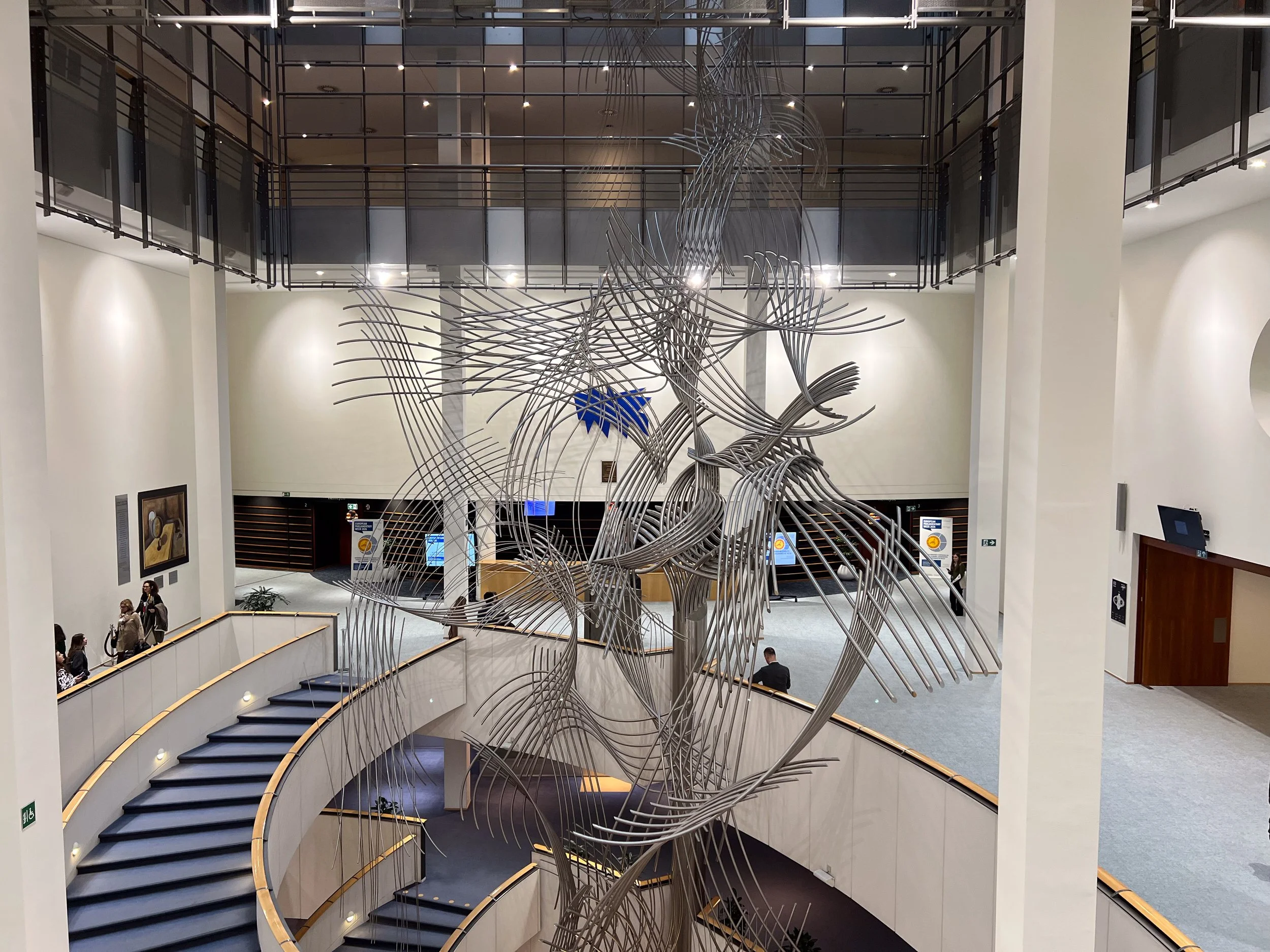
"Confluences," a kinetic sculpture by Belgian artist Olivier Strebelle, is located in the lobby of the European Parliament. The trunk represents unity, the branches represent the individual member states, and the way the movement of one branch triggers movement of other branches represents cooperation and collaboration.
Manneken (& more) Pis
It’s Not Just About The Boy
Love it or hate it, Manneken Pis is one of the more famous symbols of Brussels and Belgium. It has spawned both female (Jeanneke Pis) and canine (Zenneke Pis) variations.
It is regularly dressed up and has accumulated a wardrobe of over one thousand different costumes, which are currently exhibited in a dedicated museum called GardeRobe. Because the little guy has been repeatedly stolen or damaged throughout its history, the original is now on display inside a protective case in the Brussels City Museum, and a replica is on the street at the corner of Rue de l’Etuve and Rue du Chêne.
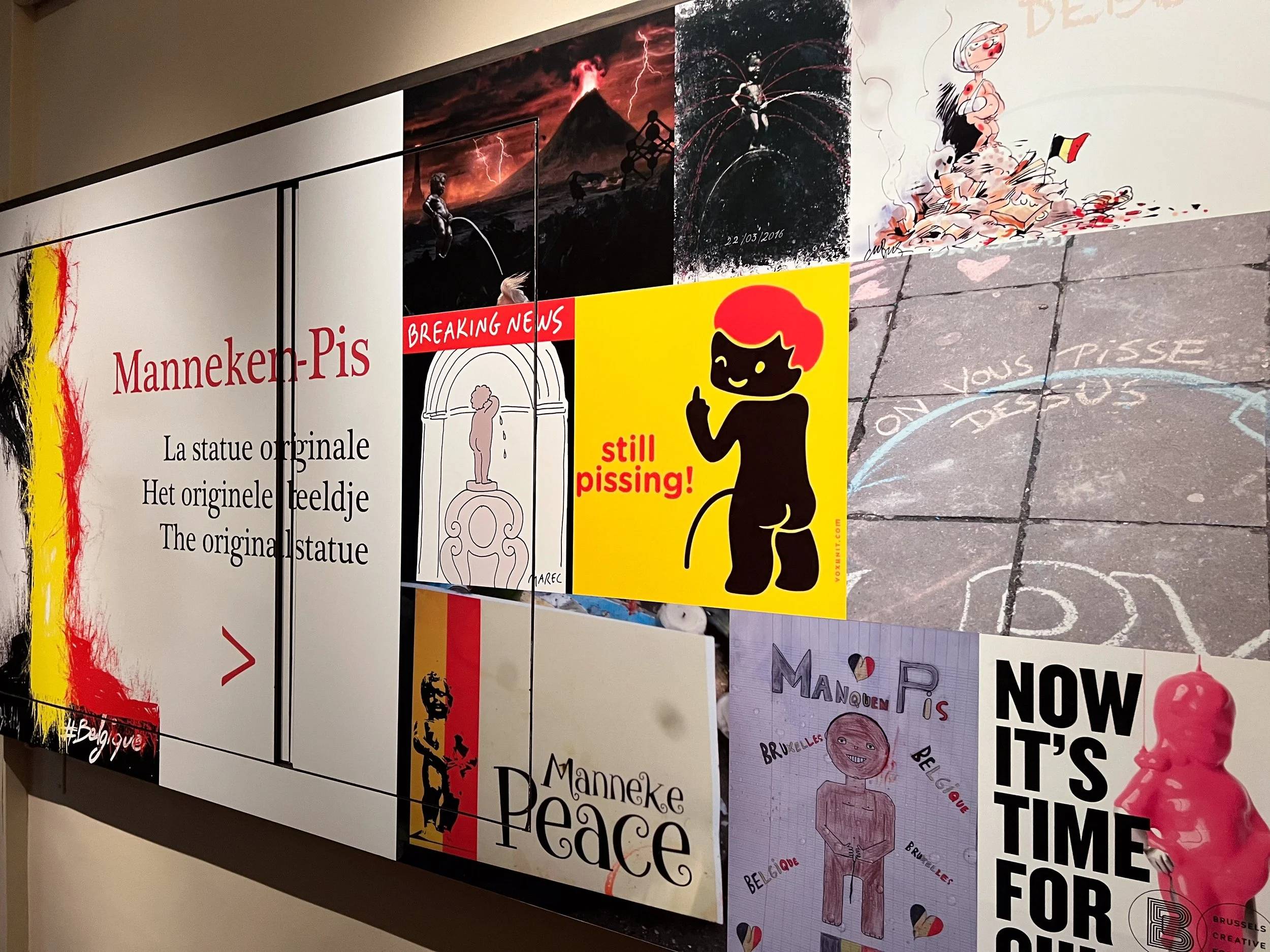
For me, the most interesting thing about the Manneken Pis statue is how it has been used in propaganda over the years. This display is in the corridor of the City Museum, leading to the room hosting the original statue.
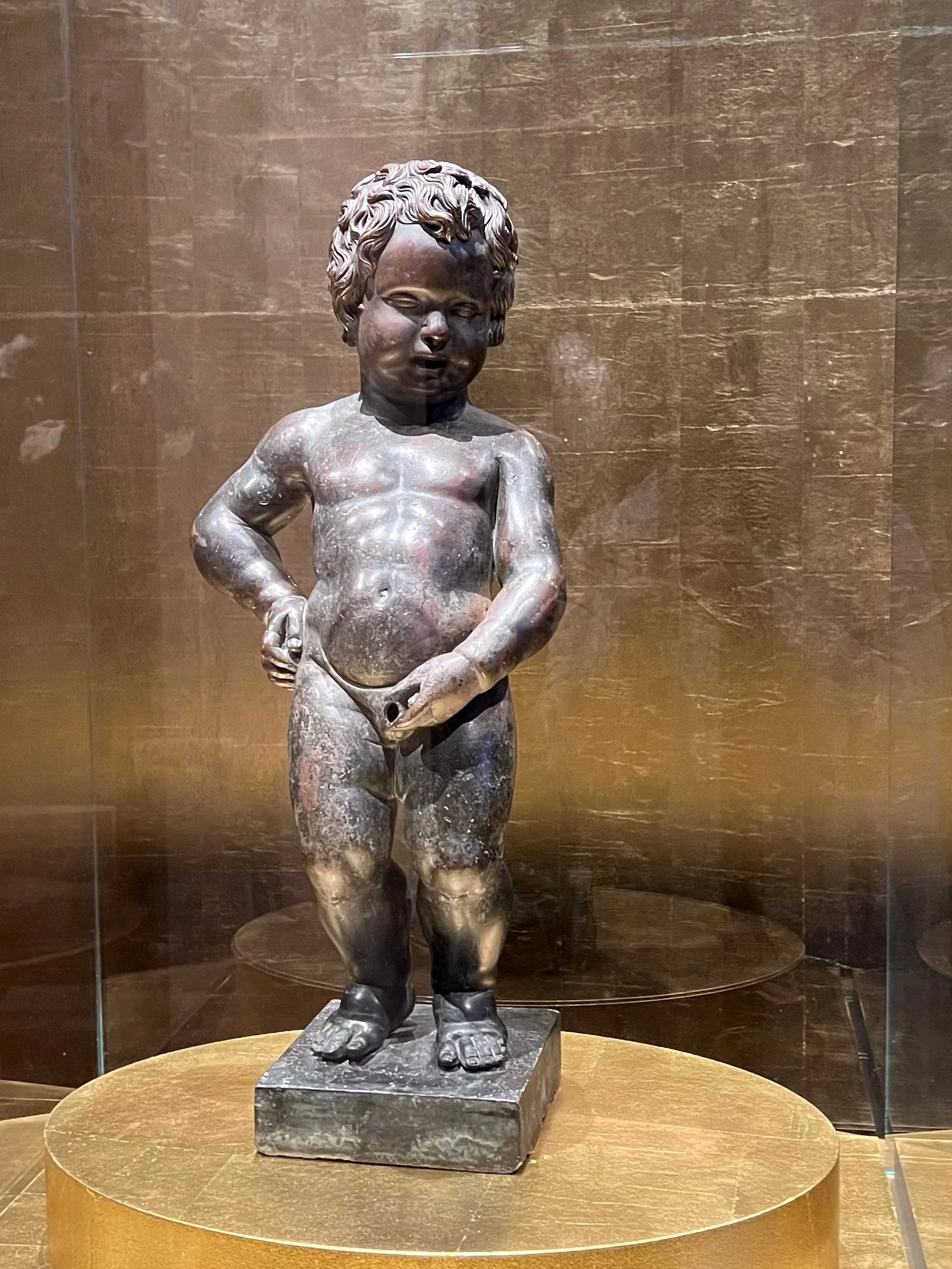
The original Mannekin Pis, now in the City Museum in the Kings Hall.
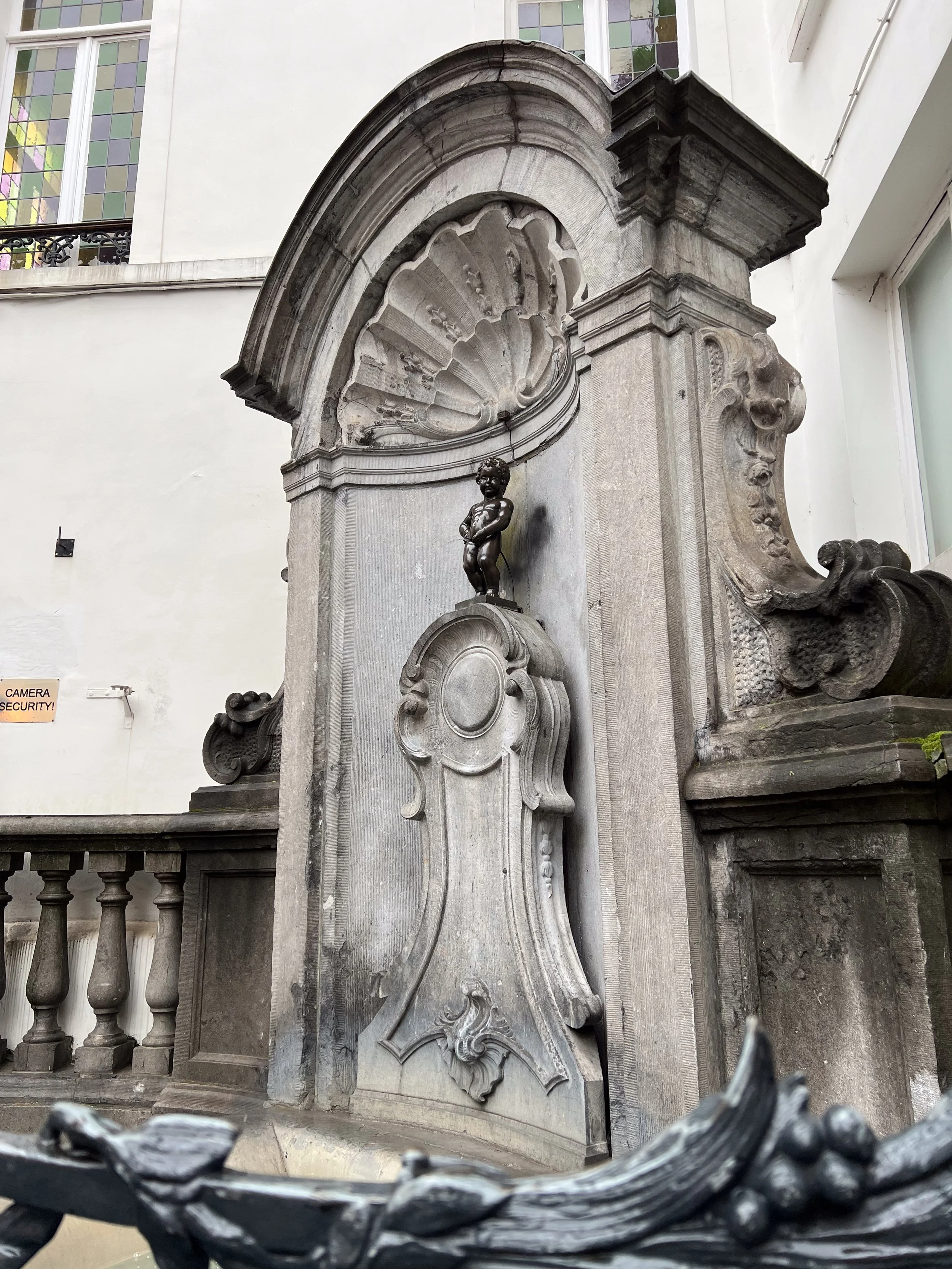
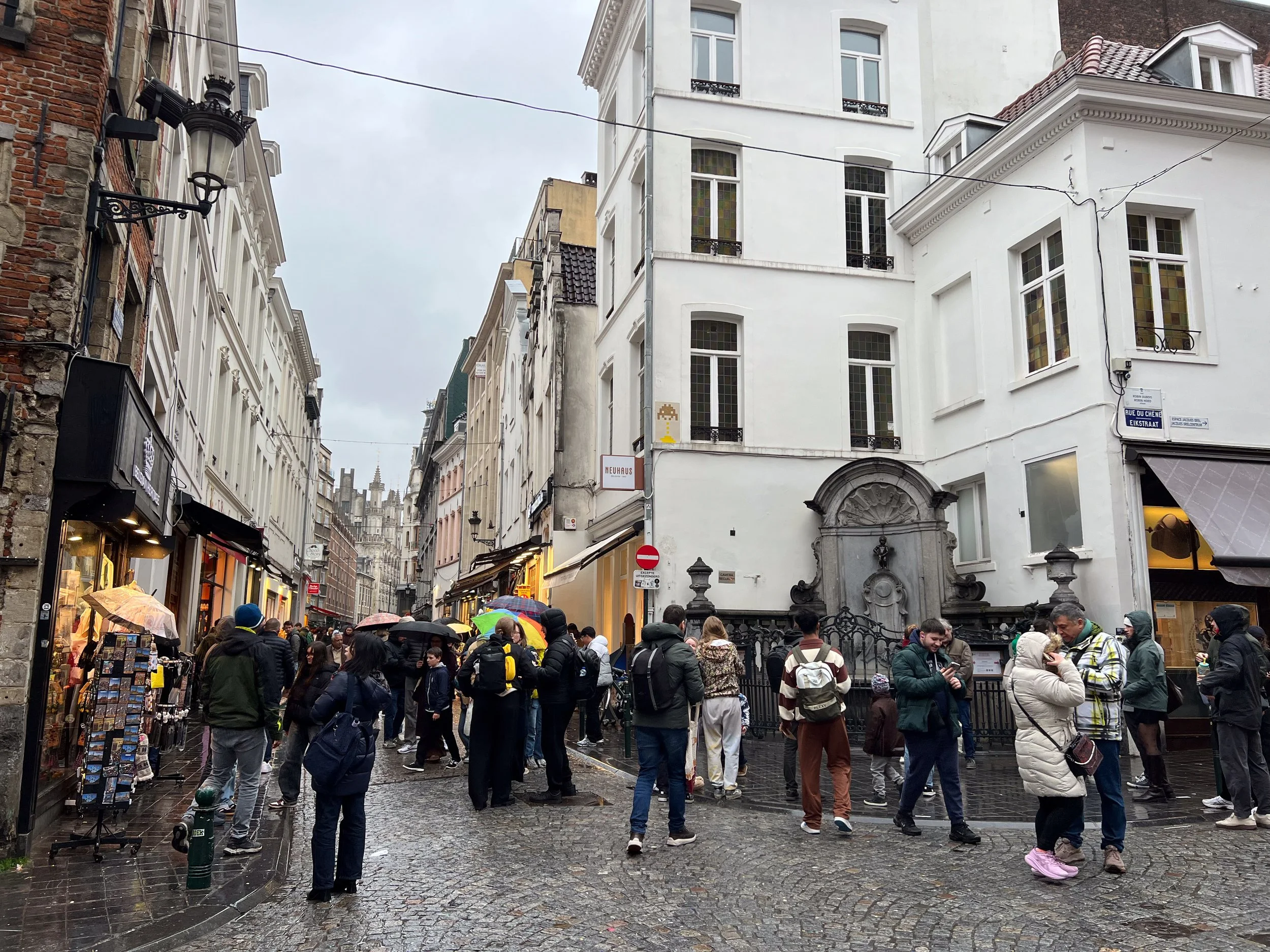
Tourists (like me) photographing the replica.
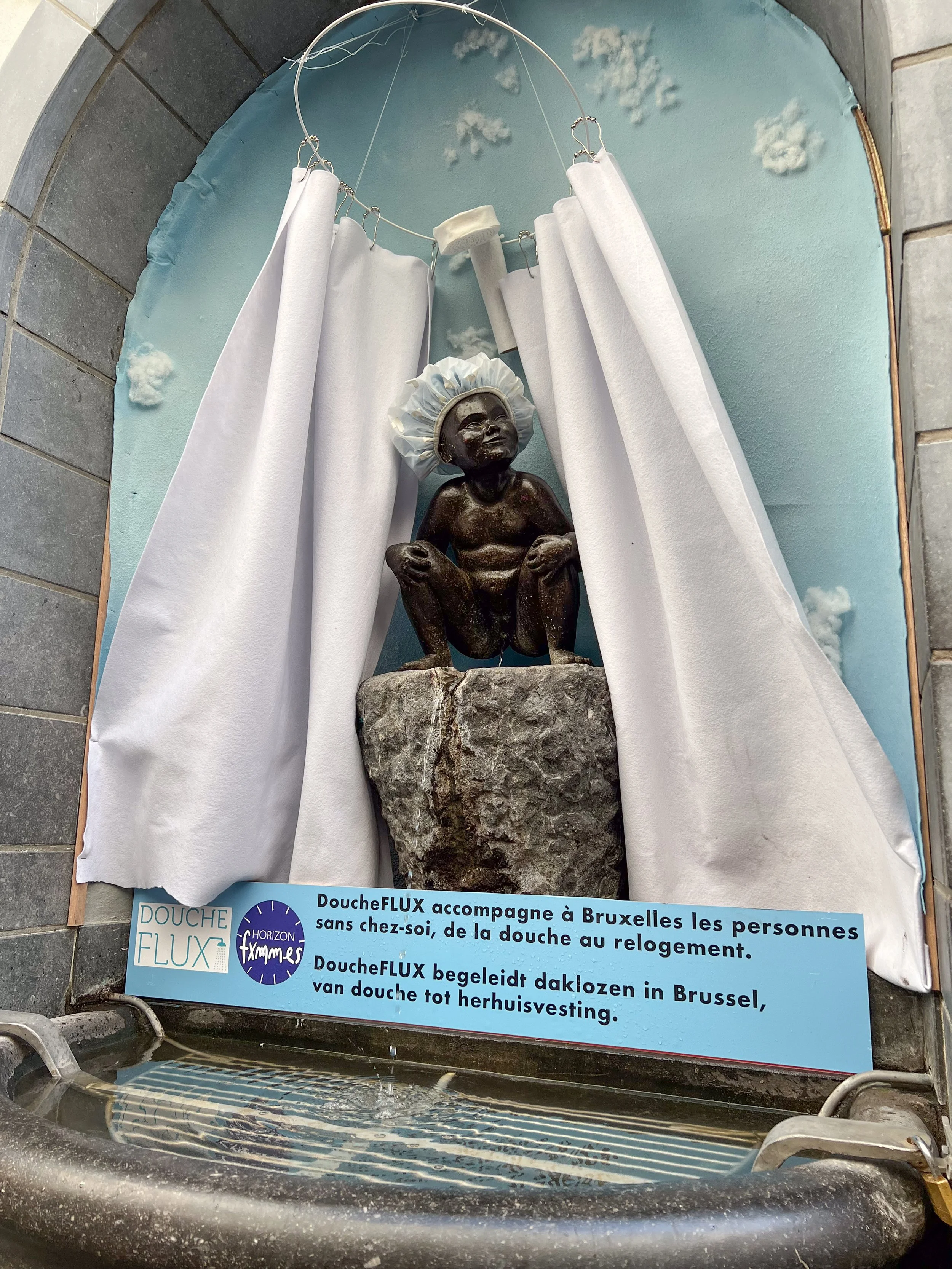
The current decoration for "Jeanneke Pis" is by DoucheFlux, an organization working to end homelessness. The caption translates to "In Brussels, our support services ensure that people feel at home—from the shower to their housing."
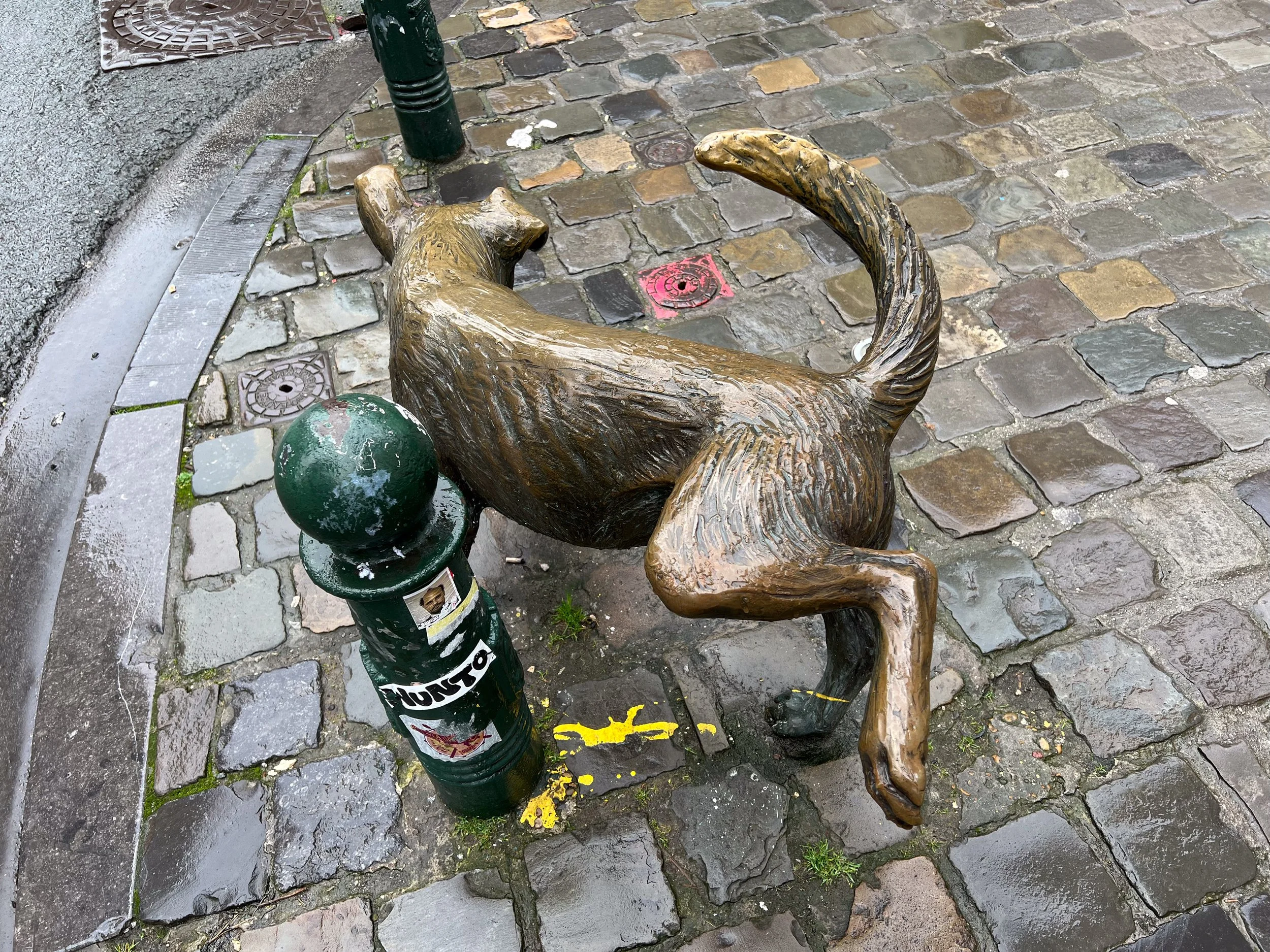
The Zinneke Pis, which I came across in the Dansaert District while searching for some of the murals on the Comic Book Trail.
Street Art & The Comic Trail
Tin Tin, Asterix, The Smurfs, Obelix, and more have been immortalized in fantastic murals comprising the Comic Strip Trail, which wanders through several central Brussels neighborhoods.
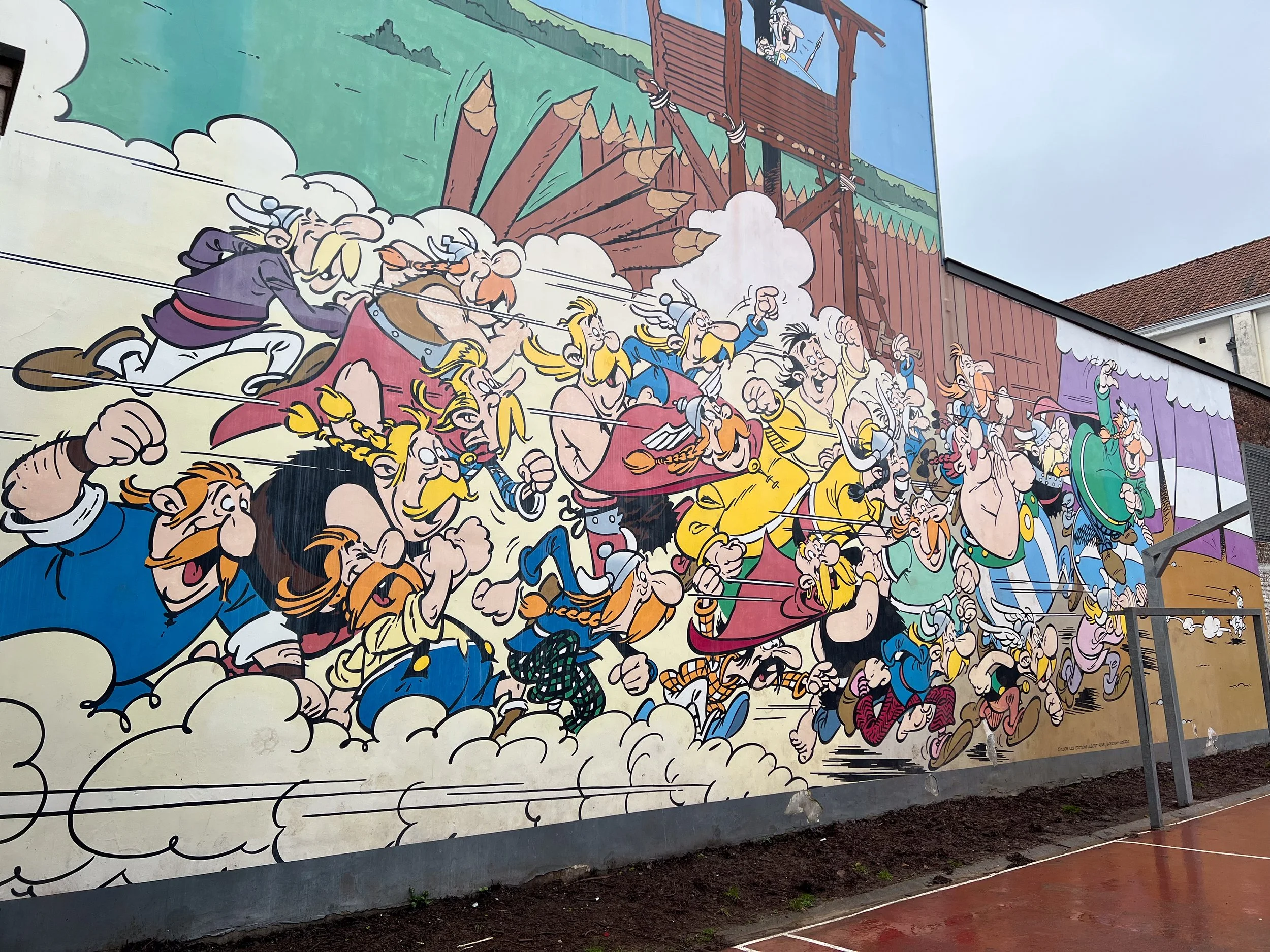
Astérix and Obelix
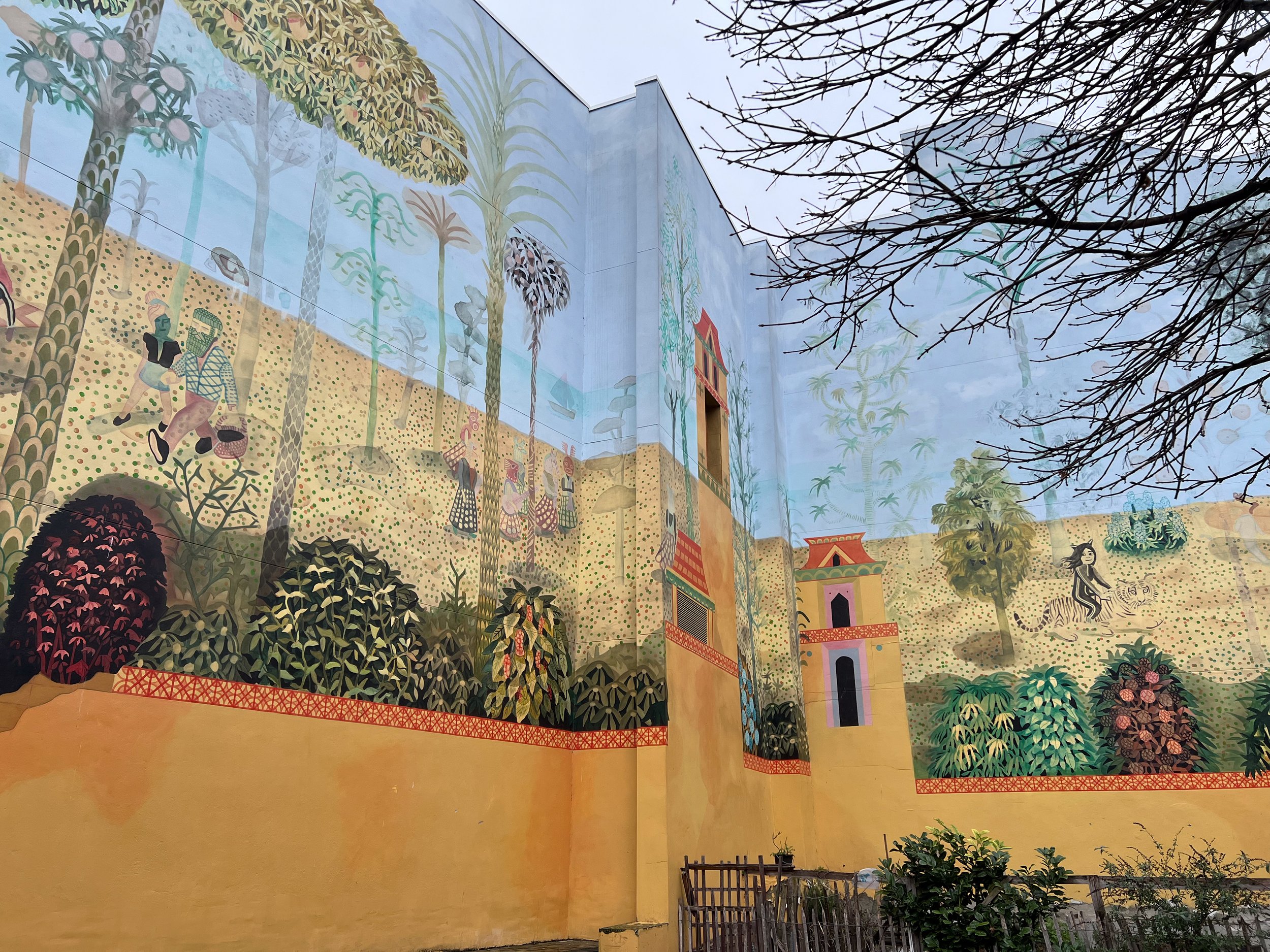
Flower Garden
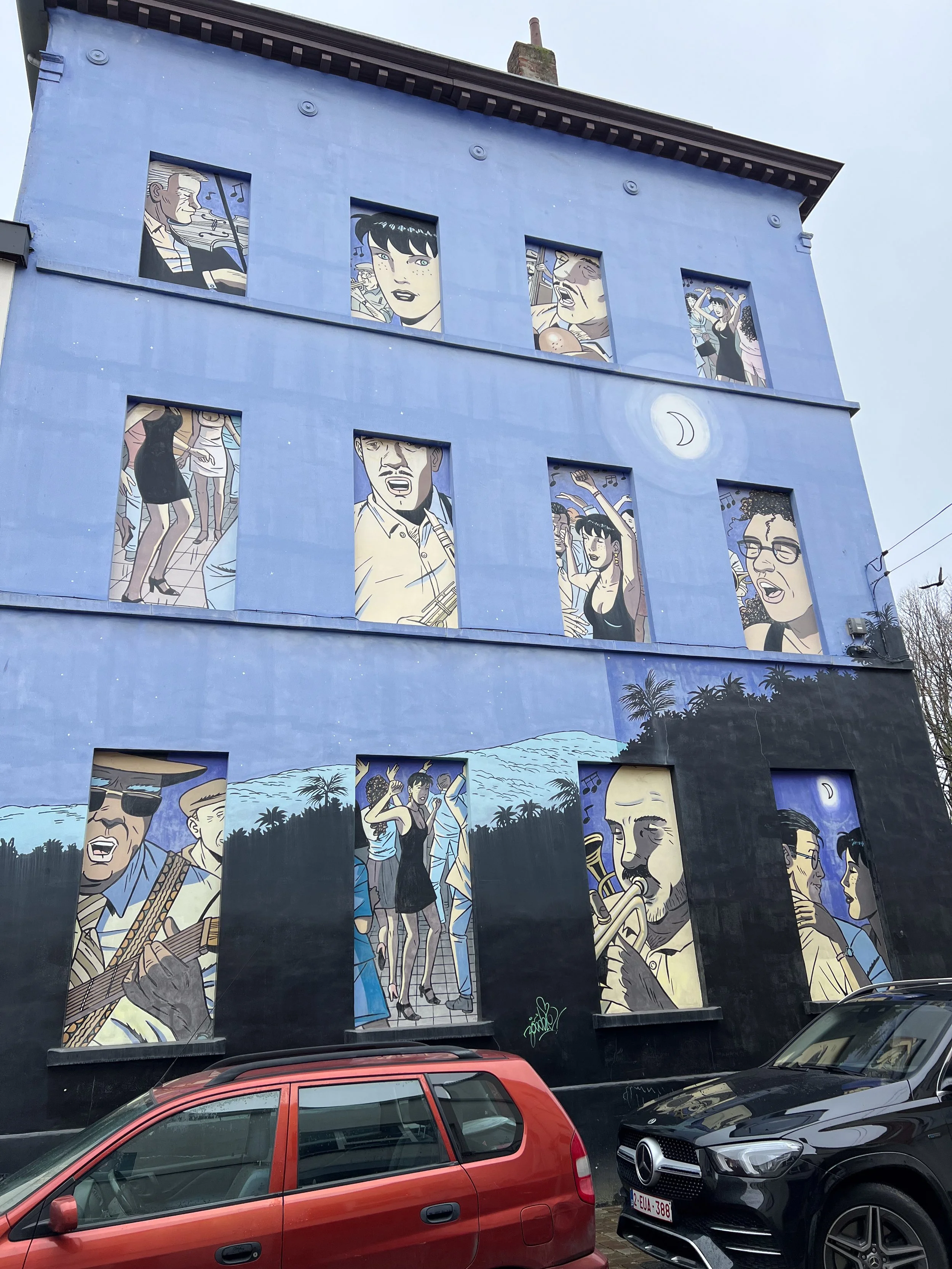
Caroline Baldwin
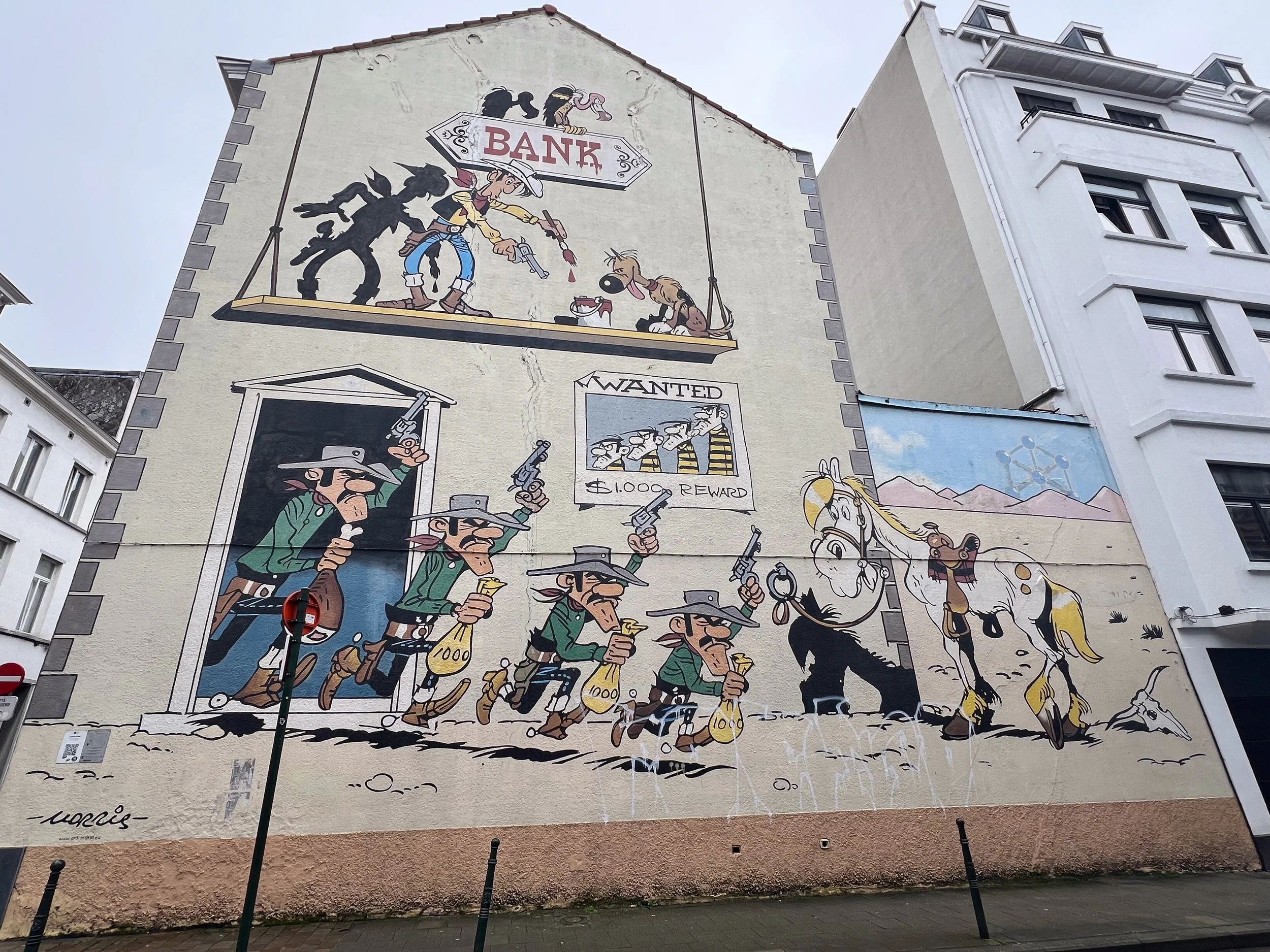
Lucky Luke
Bruges
Day Trip
I chose a perfect spring day for my visit to Bruges. It was about 1 hour 20 minutes on the train from Brussels Central Station (which was a 5 minute walk from my apartment - have I mentioned already that it was perfectly situated?).
Bruges, a UNESCO World Heritage site, is a beautifully preserved medieval city. Once a major center for commerce and capital, its historic canals at one time linked the city to the North Sea, providing a route for trade that brought great wealth. It is also the birthplace of the Flemish Primitives painting school, exemplified by old masters such as Jan van Eyvk.
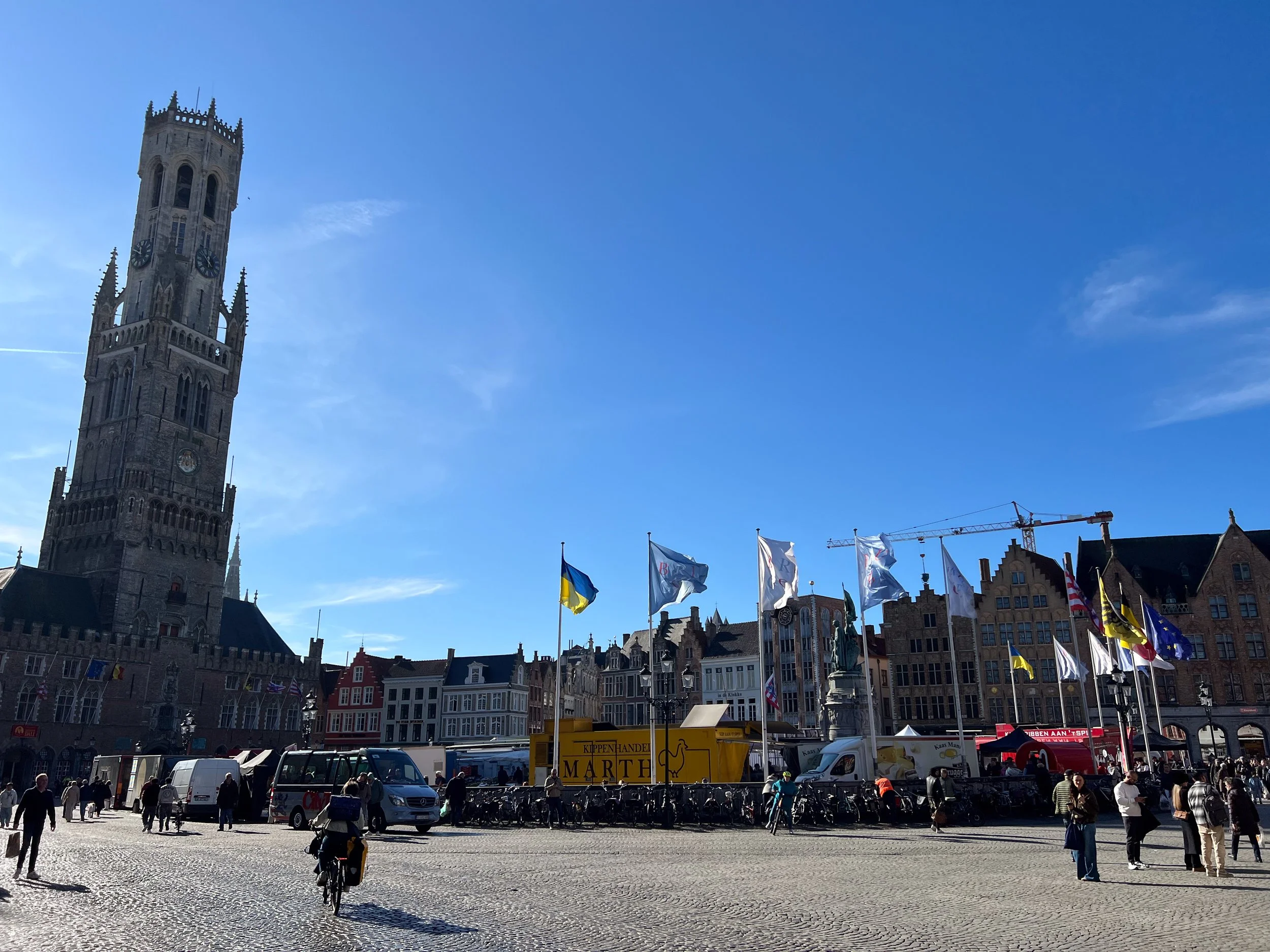
Grôte Markt (Market Square)
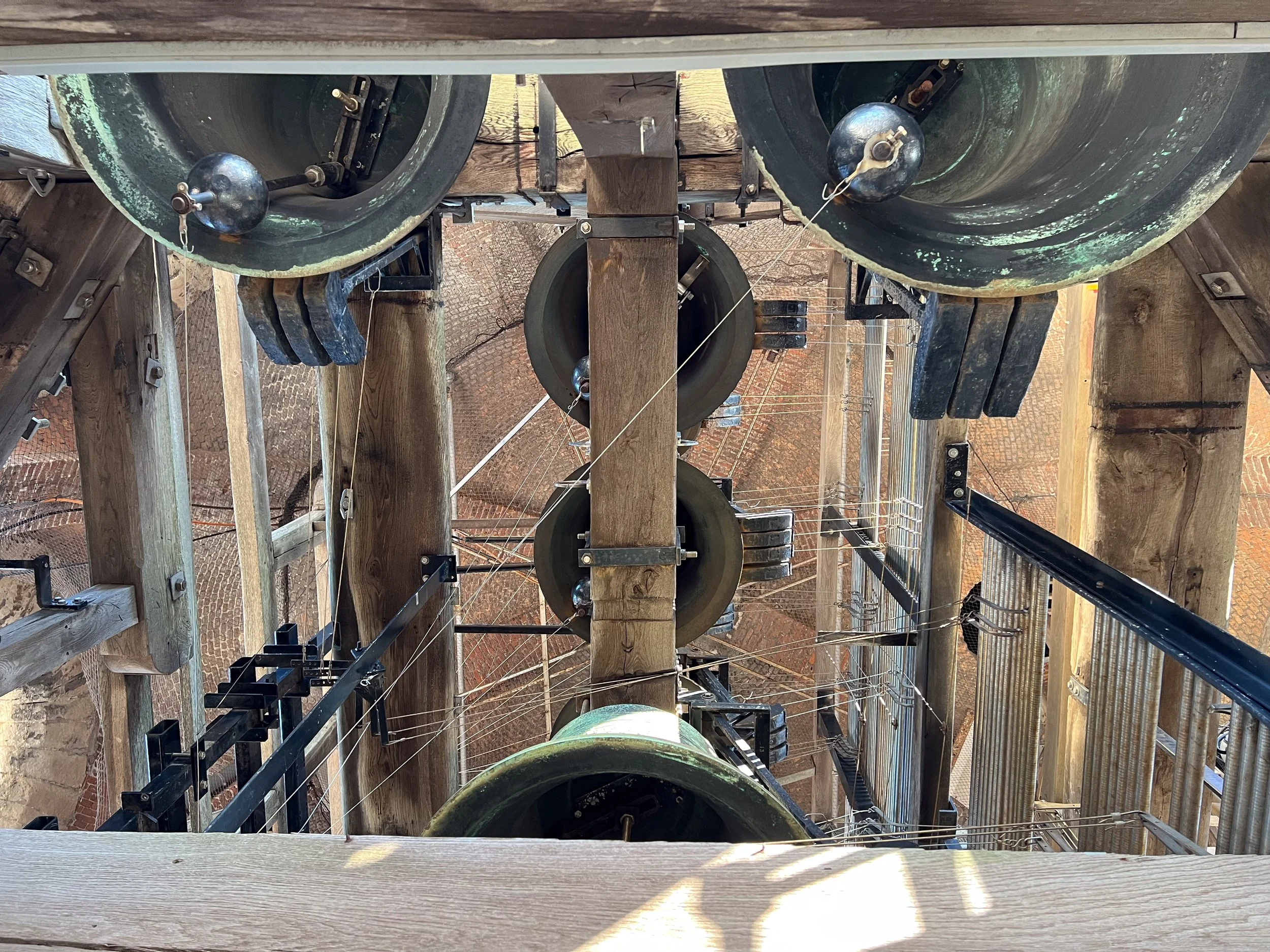
Carillon at the top of Belfort (the Belfry of Bruges)
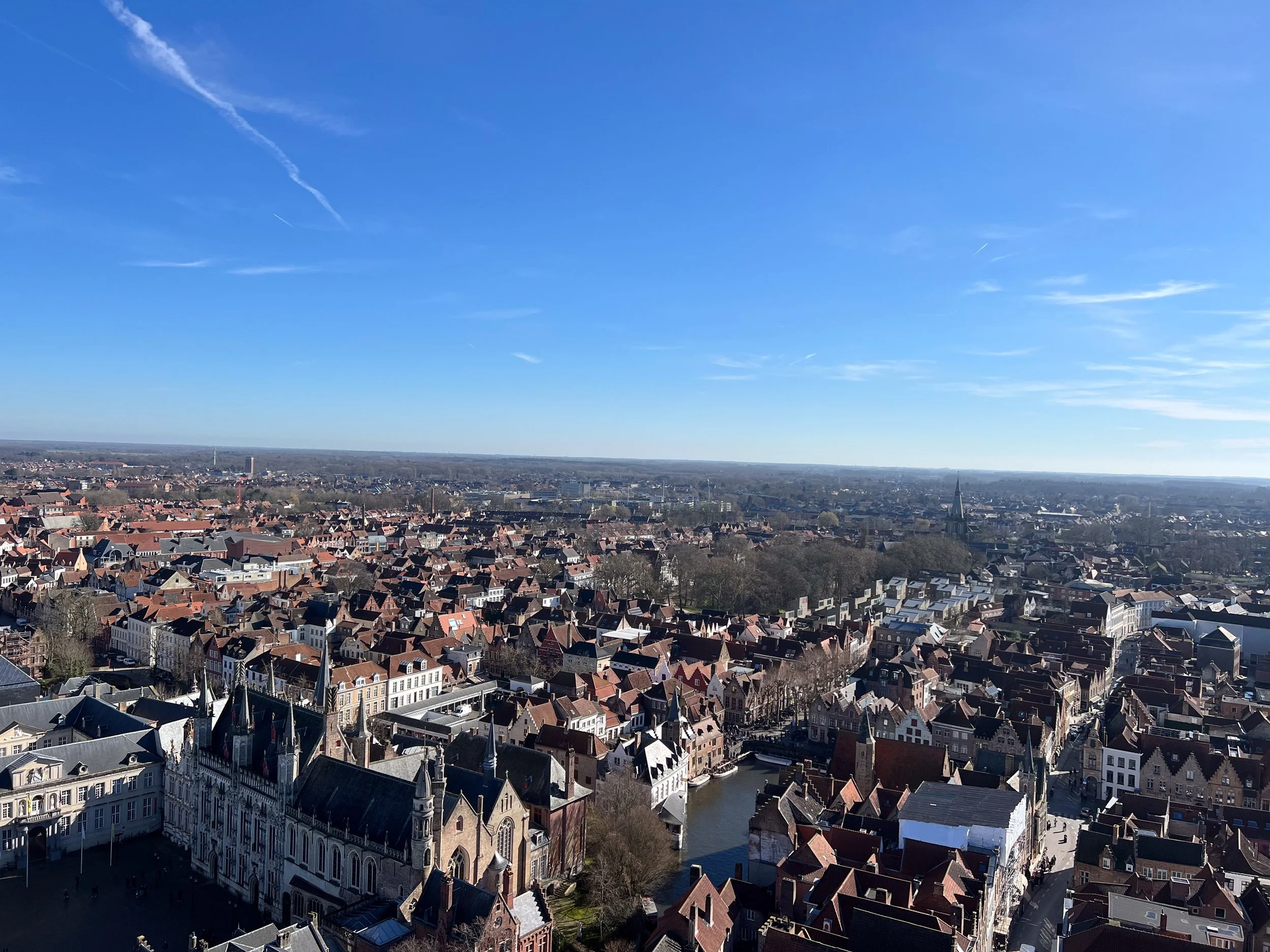
View from the top of the belfry
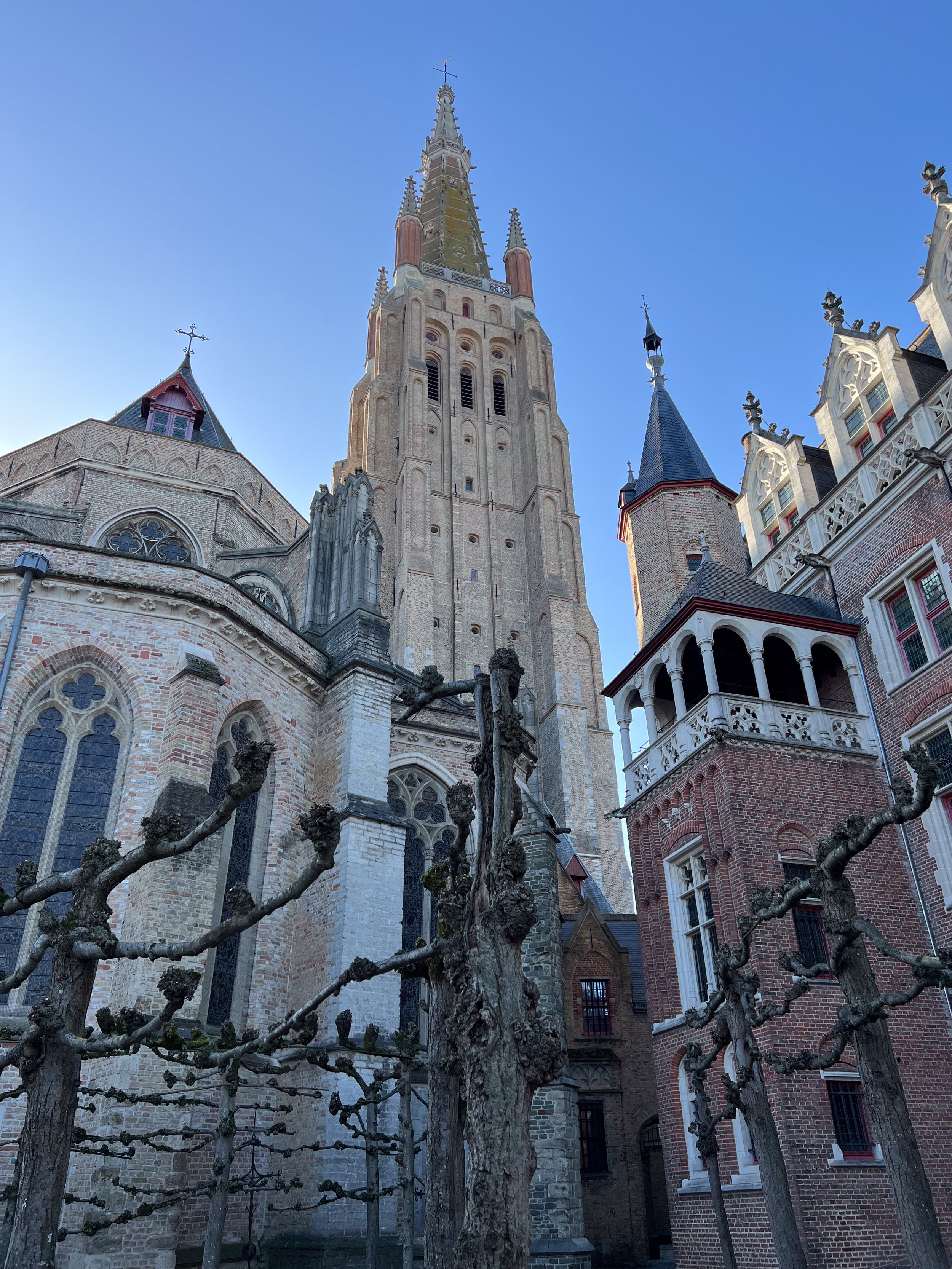
Old vines in front of Church of Our Lady.
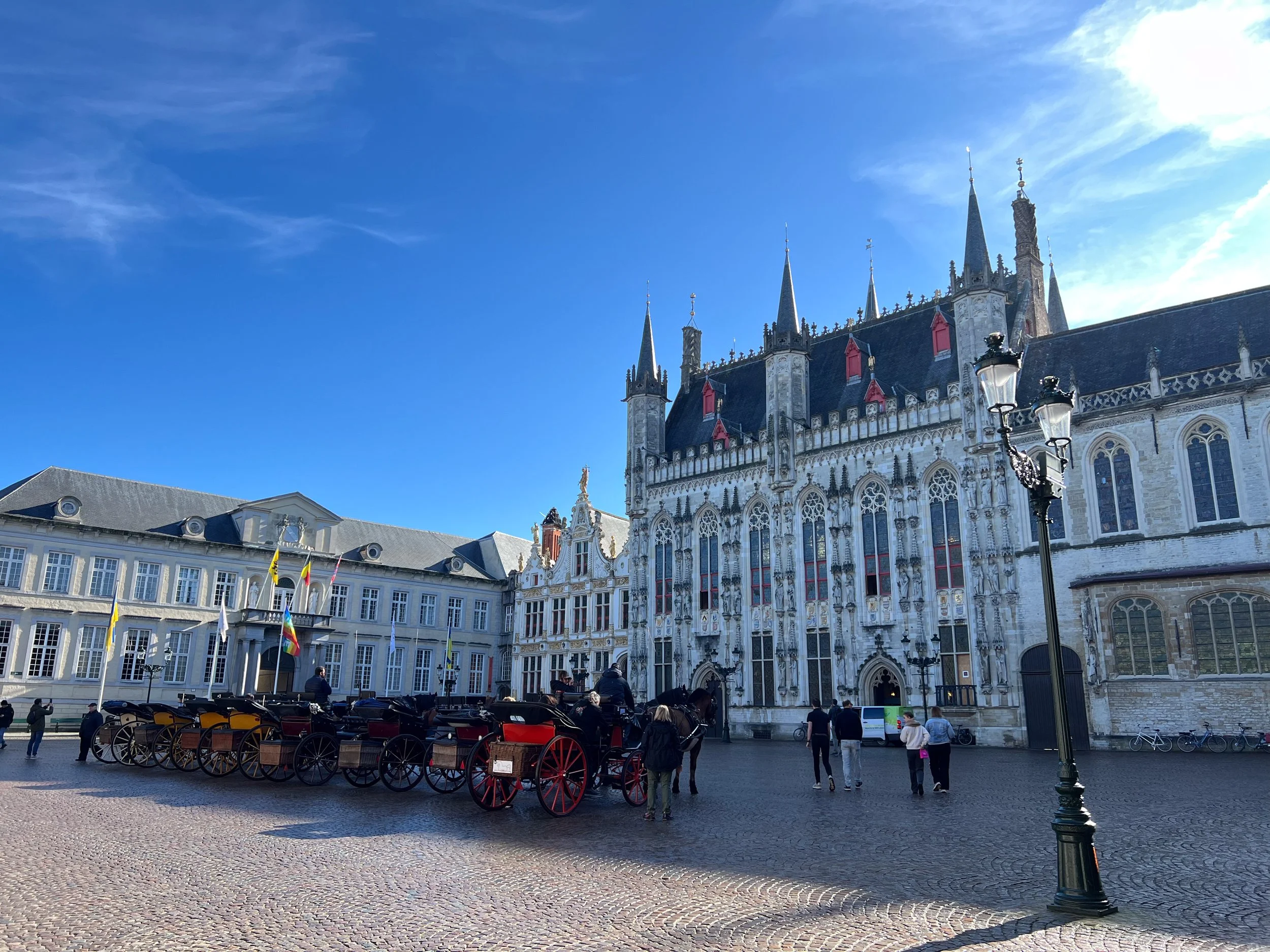
Burg Square, the administrative center of the city.
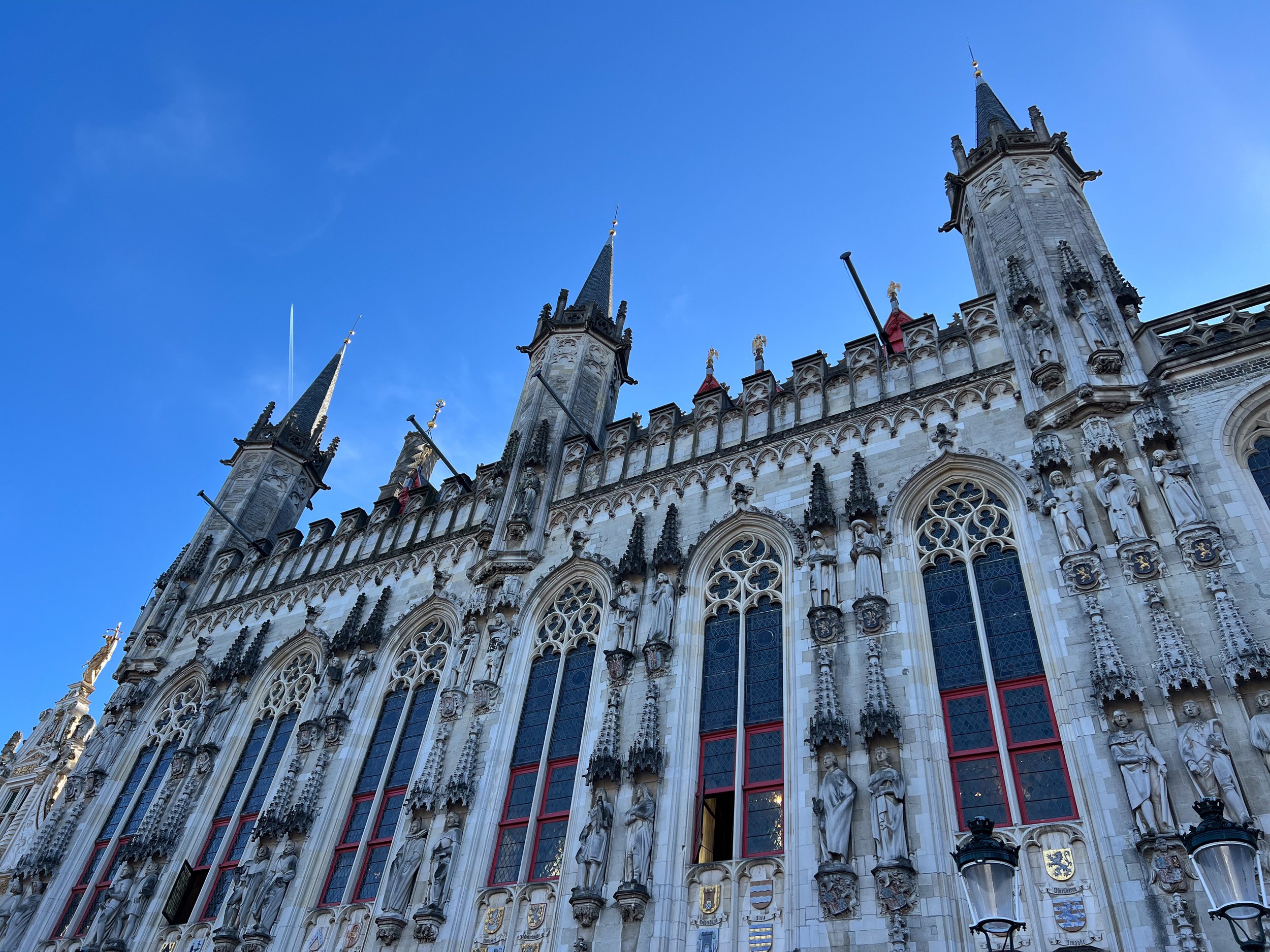
Gothic-style facade of City Hall.
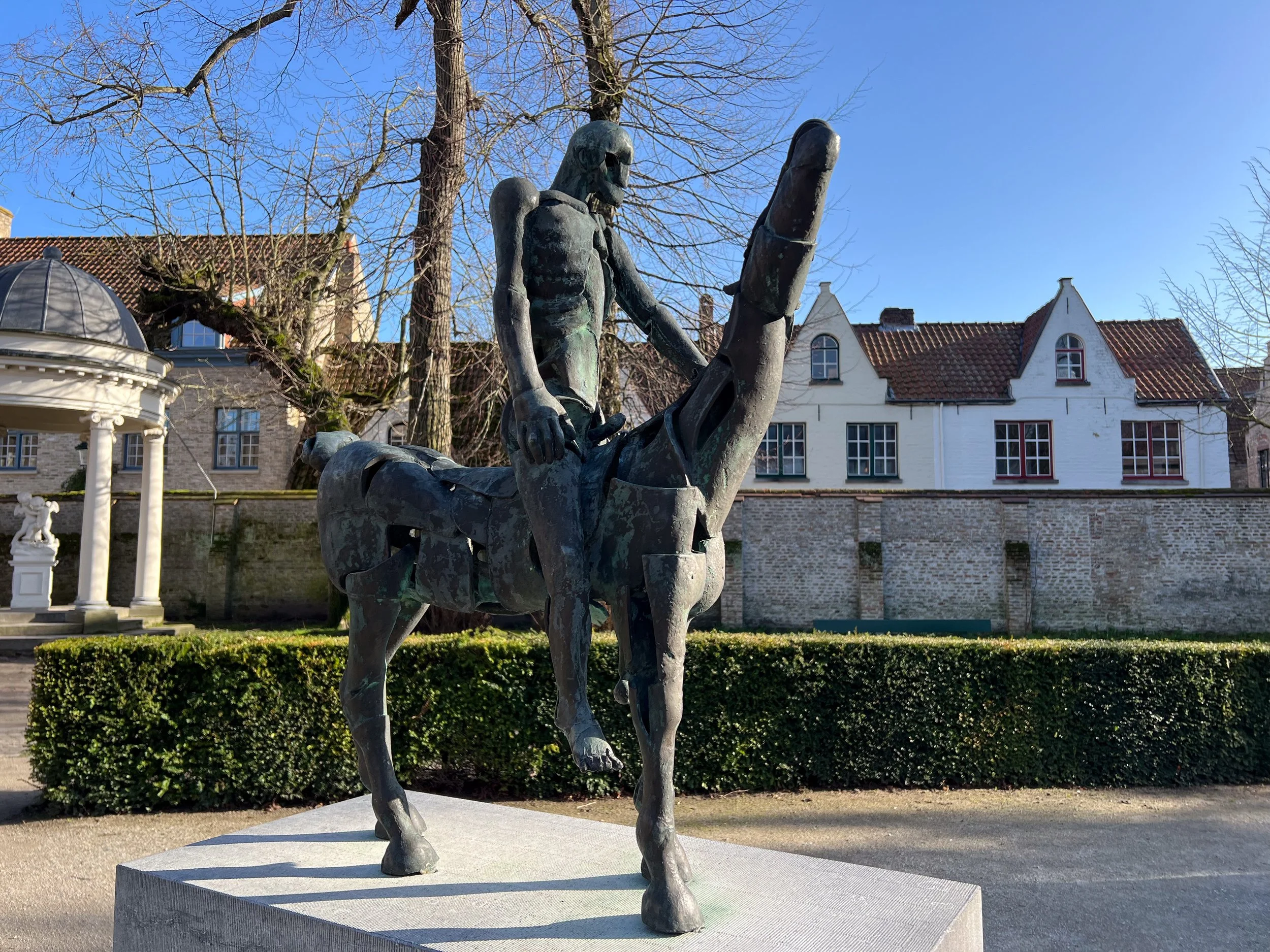
This sculpture represents one of the Four Horsement of the Apocalypse by artist Rik Poot.
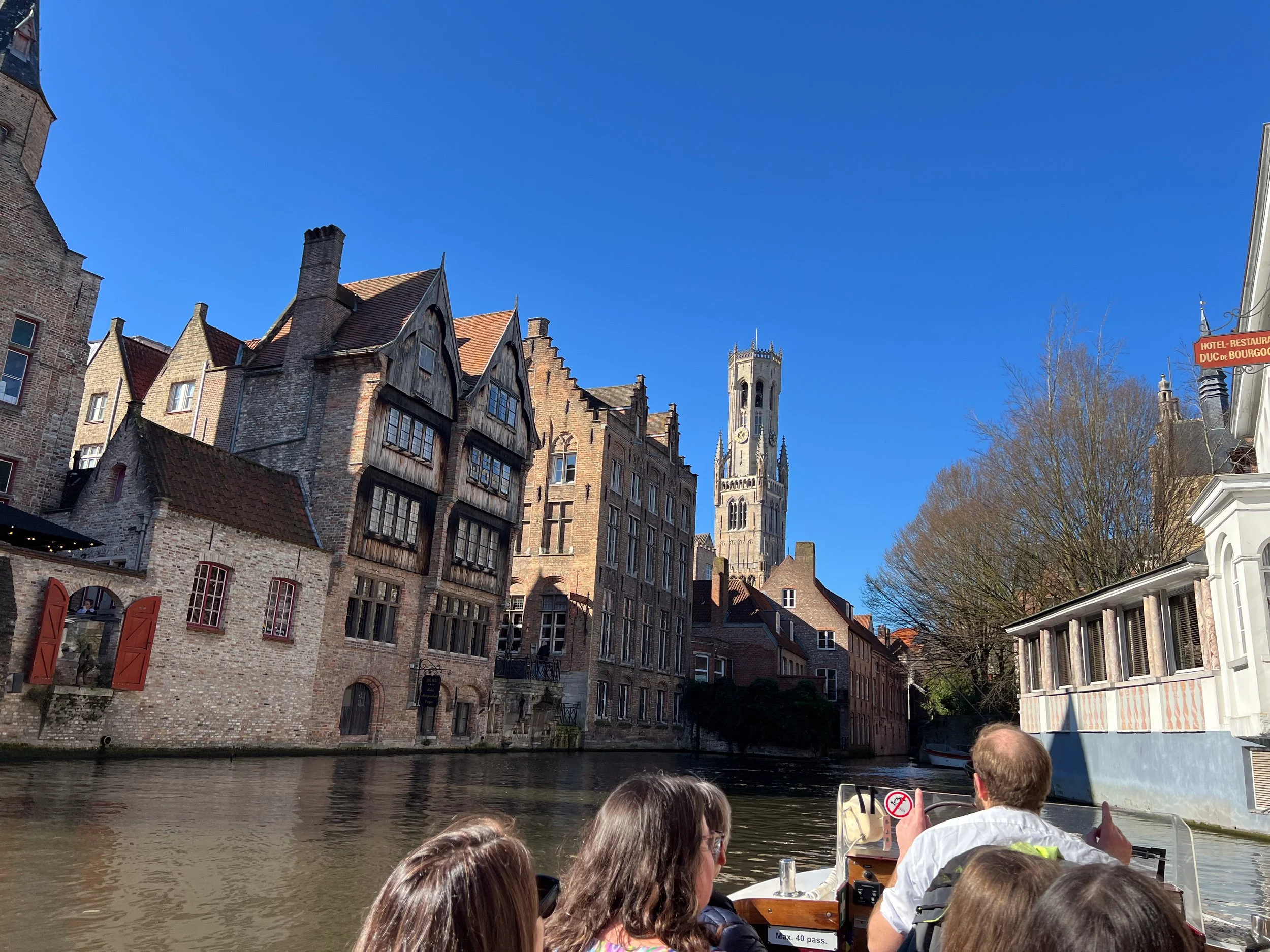
Our captain and guide on this canal boat tour seamlessly gave the commentary in English, French, and Spanish. Apparently he could have done it in Flemish, German, and Italian if needed.
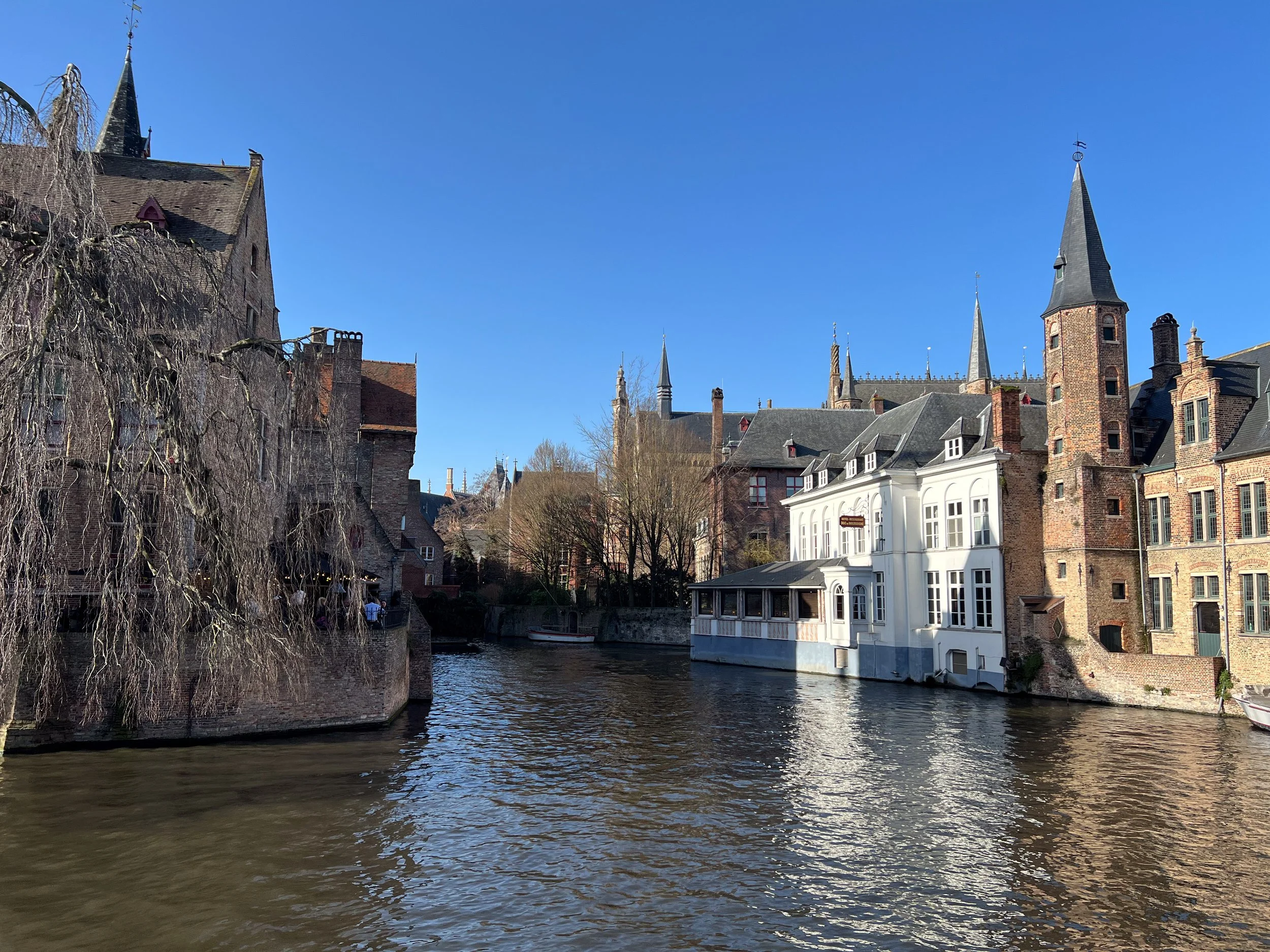
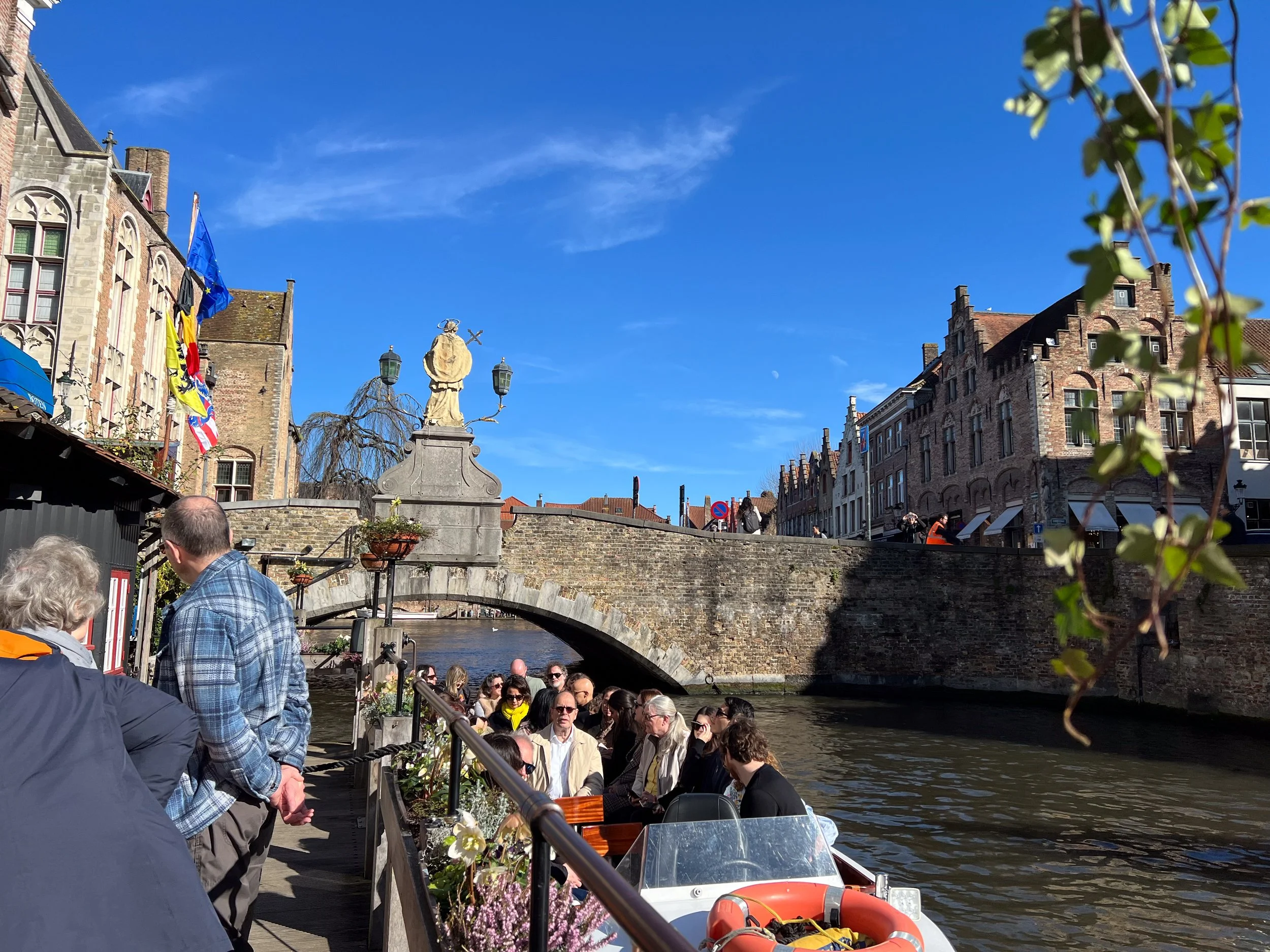
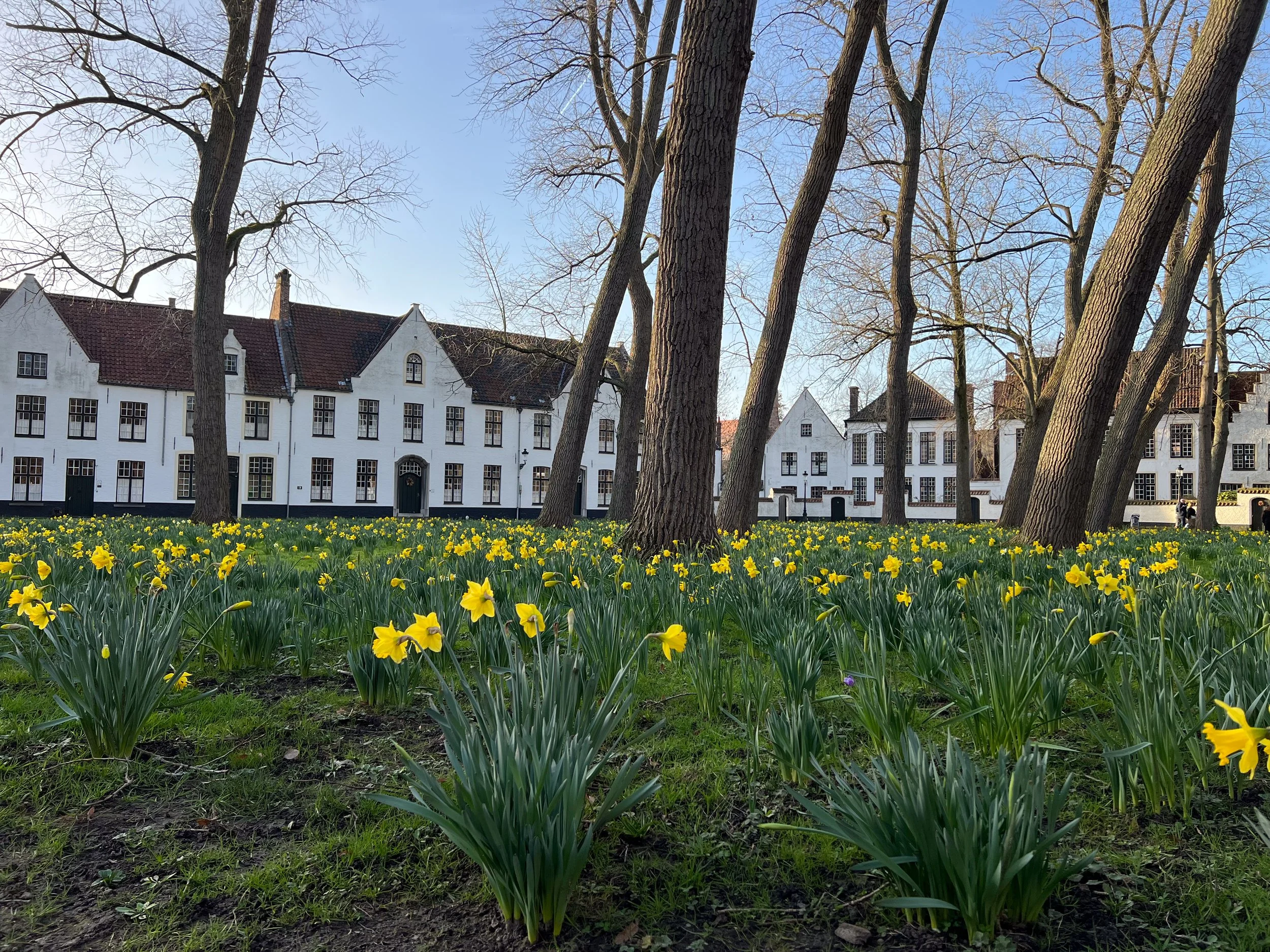
The Benguinage, a tranquil enclave that was once home to a group of emancipated lay-women called the benguines. Although not a specifically religious group, they led a pious, celibate, and mostly silent lives. For centuries, Bruges Beguinage has continuously been inhabited exclusively by women. Today, some nuns from the Order of Saint Benedict and Order of Vincent de Paul live there, as well as single women.
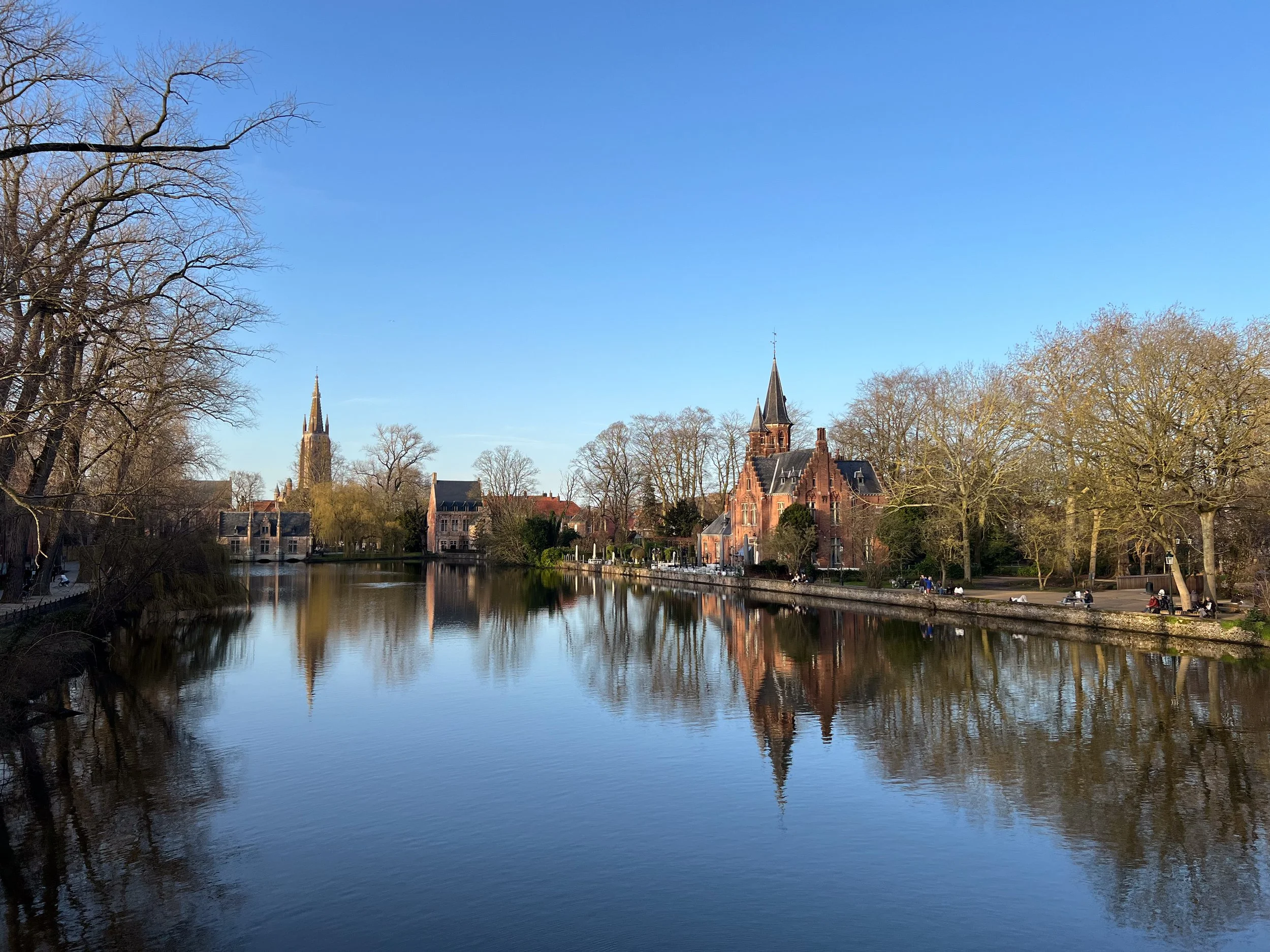
Minnewater, the Lake of Love